Avventura in Italia del nord

Just before the arrival of spring in 2016, we journeyed to Italy. I would like to return to the adventure that I shared with my family on the Italian peninsula, a place which neither my command of English nor my nascent awareness of Italian will successfully convey. So with what words and images I have, please enjoy a story of l’Italia of the North (or at least the northern half of our journey) with some occasional use of Italian names and language.
………………….

At night, riding above deck on a mid-size boat known as a vaporetto, we experienced our first moment of vacation stress as we searched for a seafood restaurant called Al Covo. We originally had a reservation for 8:00 pm, but it was already 8:31, and we were having difficulty capping off our day of arrival in the country with a successful navigation of the island city of Venezia (Venice). We called the restaurant and found out that after 9:00 we couldn’t be seated. So after disembarking in what we hoped was the quartiere, or neighborhood, of the restaurant, we proceeded on foot with map in hand.

La Venezia at night is a place that instantly brought me to thinking of Shakespeare’s opening scenes in Othello. As we watched the boats and felt the damp air in the darkness, there could be no doubt that with Meredith’s help, I found myself in the Old World. With the assistance of a hotel concierge who spoke perfect English, we found Al Covo at 8:52 pm. The owners were an Italian-American pairing, the husband a native of Italy and the wife from Lubbock, Texas. Needless to say, she gave my wife a warm hug of greeting after learning that we hail from the Capital of Texas, and this felt like an apt celebration as well of our finding the restaurant just in time.

un-piatto-di-pesci-della-griglia
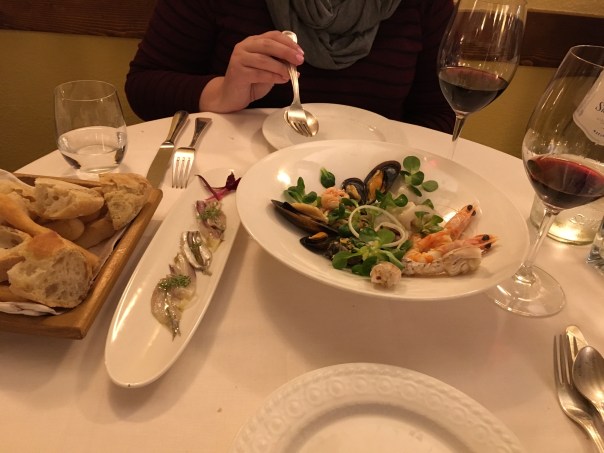
The mixed seafood plate at Al Covo with Amarone wine

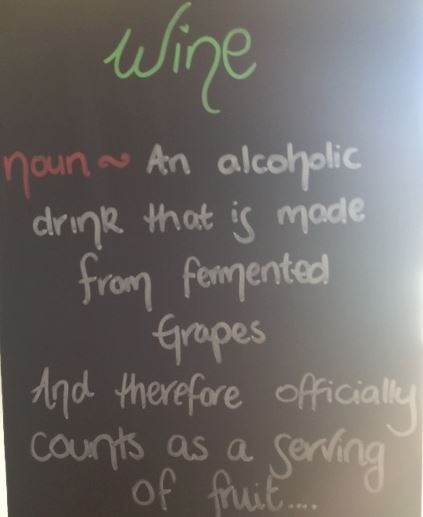
One interpretation of Al Covo is “The Hideout,” and we found the delicious fish and inviting atmosphere to be excellent. The restaurant offered me my first ever glass of Amarone Valpolicella wine, and its rich flavor was an appropriate pairing for their incomparably fresh and painstakingly prepared regional fish. The restaurant is highly recommended—if you can find it!

During the overcast and rainy weather, we explored Venice and witnessed the flooding and the tourism-based economy at work. As we walked about this damp and sinking city, we took note and captured some picturesque views from its bridges.

view-from-piccolo-venezia-ponte
A view from a Venice foot bridge

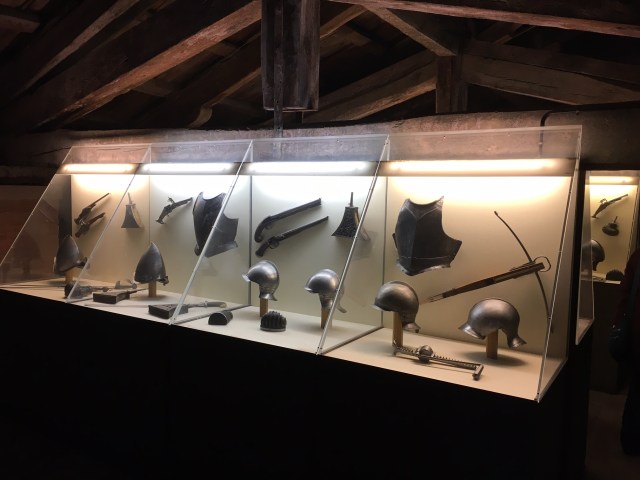
We toured the Palazzo del Doge (Palace of the Duke) where we saw the interrogation room and learned of the story of Casanova while visiting his cell in this secretive old structure. The Palazzo was the political center of the old kingdom of Venice, and the weaponry and armor of centuries past is on display along with many other artifacts from bygone eras.

armaments-of-palazzo-del-doge
Armaments of the Palazzo del Doge
le-scale-grandi-al-palazzo-del-doge
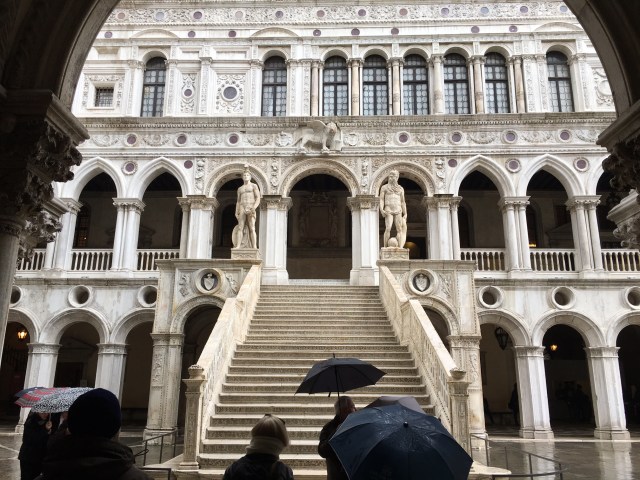
An interior staircase at the Palazzo del Doge, featuring Greco-Roman guardian statues and the winged Lion of San Marco above the central arch.

For Meredith, La Venezia is not necessarily a city that she would visit regularly, and yet her sense is that anyone remotely interested ought to see it at least once. She was so right, and our adventure had begun perfectly. We concluded our trip with a visit to see the glasswares and other products of the craft-making artisans on Murano and Burano.

she-is-at-il-gatto-nero
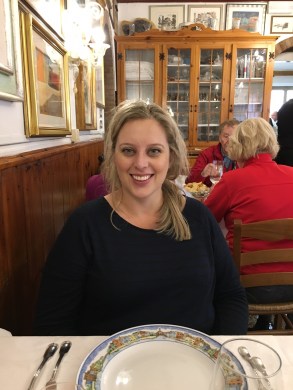
She’s at the Gatto Nero on Burano

There can be no doubt that Italy’s cuisine was as brilliant as billed from the start of our trip. On Burano, after shopping for crafts and linens at the shops of several merchants, we went for a late lunch at the Gatto Nero (black cat), where we enjoyed the house red wine and fresh made linguini and seafood pasta.

The authentic culinary gesture of having extra virgin olive oil added fresh to my grilled fish plate was the perfect touch, and the dining room of the Gatto reminded me of Italian restaurants in South Philadelphia as well as the experiences I remember of eating pasta in the homes of my relatives during the 1970’s and 1980’s.


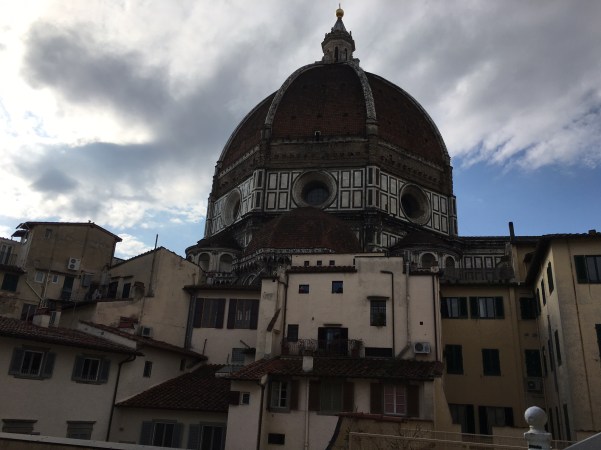
We rode the Freccia Rossa, or ‘red arrow’ train, south to Firenze (Florence). As was the case in Venezia, Meredith was eagerly awaiting my reaction to various sights in the city. Our Air BnB was located in the shadow of one such sight—a certain giant “cathedral in pajamas” called Il Duomo. This grand structure provided us with a challenging climb up 464(?) steps to picturesque views of the city in every direction. The climb from the bottom floor to the observation deck at the top is a circuitous route that requires a great deal of effort and patience as one paces and angles around the old, dark, stony interior with fellow tourists squeezing past on their way back down.

il-duomo
The top of the Duomo seen from our temporary apartment

The climb presented us with a brilliant look at the rust colored rooftops of Firenze and the distant mountains…

una-vista-dal-duomo

The climb up to the Duomo’s zenith led to one small problem for me. I became fairly tired and shaky and actually developed a fever that night. Una febbre per la gioia d’Italia forse? No it was an actual fever, and I was suddenly in a bad state of body and mind on the most rapturous vacation of my life. Lesson learned: adversity can strike any time. Meredith, equipped with a willingness to use her “Spagnolo dei bambini” (baby Spanish), set out to find me apple juice and chicken soup for my severely rattled stomach. (Fortunately, many Florentines speak English quite competently).

Each time I thought I was getting better, night-time would bring back the effects of the fever in full. However, there was a trip that I had no intention of missing: our guided tour of some small vineyards of the Chianti region.

Our tour guide turned out to be a delightful woman who was definitely our kind of person, a vegetarian from Sicily who had a fondness for fostering rescue dogs. As she noted my questions on the Italian language and my embryonic competency, she prompted me to speak in the language whenever I could.

12th-night-setting-a-greve-in-chianti
On this tour, we visited two vineyards of the town Greve in Chianti. At Castello Vichiomaggio, we tried a delicious “super Tuscan” as well as two varieties of Chianti while enjoying a savory pasta lunch. We were also shown a courtyard that had been featured in the film adaptation of Shakespeare’s 12th Night.

We also visited the Solatione vineyard, where we learned about how they produce their vintages, and we sampled some of the most alcoholically rich and robust Chianti that I’ve ever tasted.   


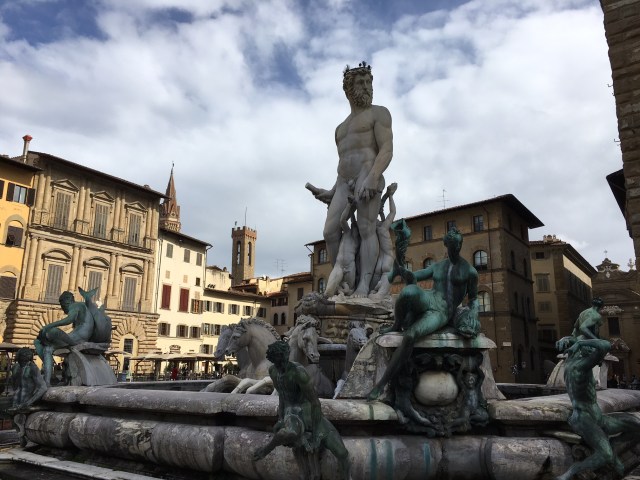
In Città (in the city), we saw a great many sights of artistic beauty in places such as the Museum of the Uffizi. The statues, architecture, and cosmopolitan air of Firenze were quite engaging. As a former English teacher and religion major, I delighted in the presence of the Greco-Roman heroes and gods in their various forms.

neptune-a-firenze
A statue of Poseidon appears to survey Firenze’s tourists

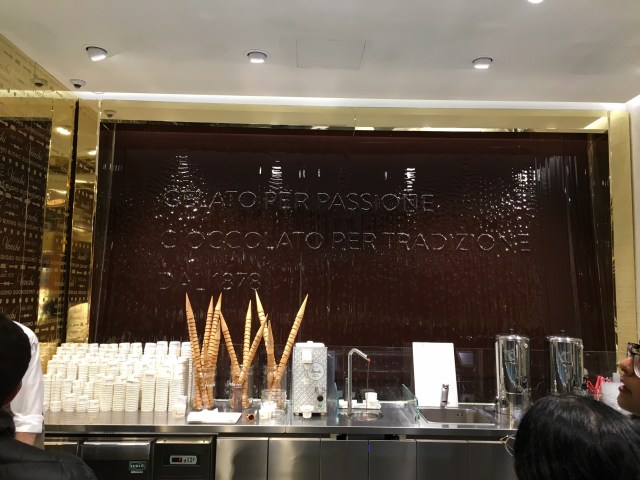
When in Italy, one must take advantage of opportunities to have gelato, and in Firenze, Meredith and I found a suitably fantastic establishment for this pursuit. At Venchi, they spared no effort on either the pomp or the delicious flavors that could be offered.

muro-di-cioccolato-venchi-a-firenze
The flowing wall of chocolate at Venchi Gelato

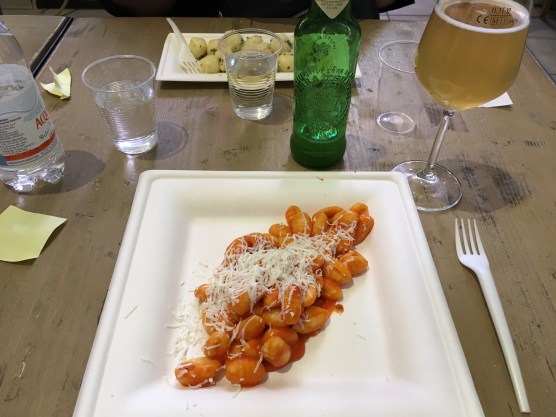
One afternoon, Mere mapped out our path to a bustling and modern locale called Mercato Centrale. We tried out some fresh made gnocchi while I sampled an unusual lemon beer…

gnocchi-al-mercato-centrale

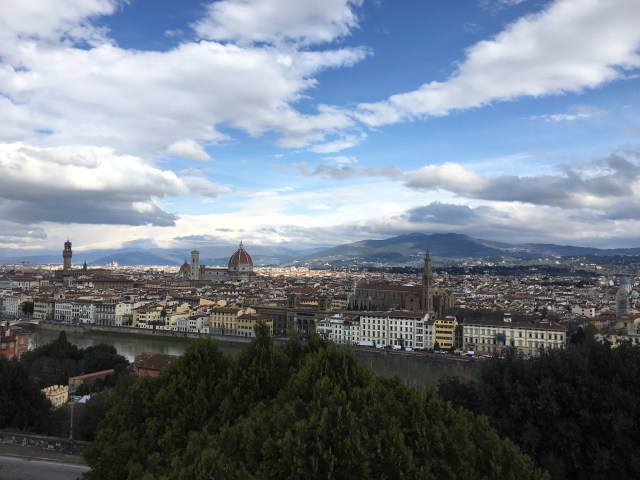
Just before our southward excursion to Greve in Chianti, we took in a delightful view of the main part of the city from just beyond the Arno river…

across-the-arno-una-vista-di-firenze
The transition from Venice to Florence was an exhilarating juxtaposition. From old and flooding streets, sea spray, and cozy restaurants to the sophisticated city of the famous Medici, we enjoyed the first half of our trip, and we savored every dish and sip of house wine that we tasted. (Not to mention the gelato).

Soon we would be headed for Rome with the memory of these two brilliant and contrasting cities in mind. Thanks for reading, and more sights and sounds from further south to come!

he-prepares-to-order-at-gatto-nero


2016: Political Discussion Then and Now

Every so often, it’s important to put a fresh perspective on a situation of any complexity, whether it’s as local as how to improve a 1,600 square foot home or as far-reaching as what to do about the condition and outfitting of a nation’s military forces. During this campaign of 2016, the politics of our Republic and the condition of our nation appear to need as many hands on deck and as many valid ideas and relevant facts as can be brought to bear on the task. We are witnessing the effects of people spending years on ideological auto-pilot and under the spell of dog whistle politics, and the effects are pretty frightening. What’s more, we are seeing on a daily basis the outcome of a continuing experiment in which social media has become the driver of how people take in information.

I was once a high school English teacher for 7 years of my life, and despite leaving the hands-on (or minds-on) work of the classroom several years ago, I still consider myself at the core to be both an educator and a student. I believe that there are a multitude of experiences and facts out there that would quite simply amaze us and in some cases change our lives if we knew about them. Many of us are having these experiences for good and for worse every day. As a teacher, it was my job to connect the larger world outside the classroom with my ostensible lessons in language arts and make this information relevant to my students. An essential part of my job was prompting the students to think critically and learn about art and communication. I was the kind of teacher who pulled down my map quite often to talk about literally where in the world certain ideas came from.

At this moment in my country, I feel as if I’m witnessing battalions of the nation’s skeletons emerging from long hallways of closets, and while I am not going to engage in the old trope of saying that this is the end of the Republic or such hyperbole, I do affirm my disgust with the presence of so many voices whose open intent is to stake out the narrowest interests and most simplistic ideas with an utter lack of realism and any capacity to value opposing ideas of merit. I write at this moment because I see a dearth of plausibility—much less wisdom—in ideas espoused by too many, and I feel a duty to go beyond the accidental or what’s worse—the forbidden conversation and push for an active discussion that takes into account the complexity of our ideals, actions, and demographics.

I came of age from a political standpoint at the end of the 1980s, and I remember very well the pride and supportive tone with which my grandfather had spoken about the Reagan presidency while he was in office. Every campaign for the U.S. presidency since the early 90’s makes me think about the political conversations on which I grew up with my father and grandfather. My dad was a musician who was as socially liberal as you could be. He believed in the legalization and taxation of narcotics, a strong social safety net, a woman’s right to choose an abortion, and in the importance of recognizing and opposing racism and sexism in this country. My grandfather, an accountant and later a postal worker who went by the name Bud, was a fiscally conservative, devoted Catholic who was opposed to abortion and high taxes. As far as I know, my dad never voted in a single presidential election. Bud voted for Nixon, Ford, Reagan twice, and George H.W. Bush. His old, by-the-book Catholicism imbued in him a reverence for Erasmus and Thomas Aquinas on matters of philosophy and theology, and his pragmatic American conservatism had made him skeptical of almost any Democrat after Truman.

pennsylvania-40430_1280

The conversations and arguments that we had across our three generations of views are now something of a legend in my memory. Every weekend was an opportunity to debate religion or politics with them in the “Main line” suburbs of Haverford Township, Pennsylvania. My dad often enjoyed watching me come armed with citations and analyses that often didn’t go over well with Bud. I remember in the early 1990s the indignant way in which Bud took issue with the authors Barlett and Steele for their criticism of trickle-down economics in their book entitled America: What Went Wrong? He bristled at their comparison of low tax rates for investment income in comparison with the higher rates for employee income. These conversations and disputes were formative for me, and I think that many of us have these revealing moments in our awareness of ideology and political history on a personal level. My wife has mentioned two conversations with her father that were bookends twelve years apart. The first talk was in the early 90s at the time of Operation Desert Storm. She remembers that the second conversation took place a decade later, during the run up to Operation Iraqi Freedom in 2003. For her, the rationales and objectives of these two wars seemed to be contradictory, and in making a case for the later military action, she felt that her father had changed some key assumptions and inadvertently made a case for neither of them.

Over the course of this past year, I’ve been making it a point to push the issue and have some of these conversations—in some cases with relatives and friends whom I see not so regularly since I live in Texas while most of my relatives are in Pennsylvania and New Jersey. My mom’s brother, a retired law enforcement officer, asked me a few months back what I think of the current political campaign. He was definitely kicking around the idea of voting for Trump because, in short, Clinton was “an Obama person.” He seemed to be bought into the general idea that President Obama was not a good leader, and I suspect he had some complaints about the Affordable Care Act. However, he asked me what I thought, and we actually had a good conversation. I acknowledged that some of Obama’s decisions did not work out that well in practice. When I mentioned the unhelpful crusade on the right against Planned Parenthood, my uncle acknowledged my point that it’s not a good plan to return to marginalizing women and putting them in a situation in which more back alley abortions take place. I don’t think that I changed his mind, but we negotiated some difficult issues and differing instincts in a very even-handed way.

I’ve been curious and attentive to political talk just about anywhere I’ve gone in the past year. During our trip to Italy earlier this year, we had a few conversations with native Italians who were definitely nonplussed by America’s flirtation with GOP nominee Trump. At the shore in Ventnor, NJ, I engaged the topic of crime and inner city violence with my mom’s husband, who has been just like a father to me since I was 5. We’ve talked politics and social issues all our lives, but I could tell that the conversation was making my mom and my older sister a bit anxious. George is a loyal Democrat (albeit a Reagan Democrat in the 1980s) and fairly centrist in his views. I was trying to bring the issue of federal drug policy into the conversation about crime and violence in cities like Philadelphia, Baltimore, and Miami. For George, this was beside the point. He was picturing night after night of newscasts back at their long time residence in Philly, in which a reporter would stand near an intersection in a long tan raincoat and describe a turf war or robbery-related murder, sometimes in multiples, and always disconnected from any overarching theme other than the idea of a bad neighborhood filled with irresponsibility and mayhem.

city-hall-91954_1280
City Hall in Philadelphia, Pennsylvania

When I brought up the crime in those other cities, George said, “I care about Philadelphia; I don’t care about Miami or those other places” and later, “I care about where you are in Texas, not the rest of Texas.” I challenged him, but I get it. George is a father and a grandfather who wants to see things get better where it’s close to him and those for whom he cares. My point was that there’s a connection—a bigger picture that influences Texas, Philly, and Florida. I think that Federal drug policy and red-lining play a big role in this while George is skeptical. A couple of times during the conversation, I took a minute to assure George that I wasn’t attempting to tell him that he’s wrong or that what he’s saying was not relevant. I was simply trying to add something, searching for a way to broaden the conversation and bring it closer to a possible solution. I had no idea of what the goal of this talk was, but I wanted to talk anyway. I turned to my mom a few times to get her input, and the expression on her face said a great deal. Her combination of staunch liberalism and practical experience came through as she acknowledged a few of my points. Then I did something that may have surprised them—I said, “Thank you.” It reminded me of conversations that we used to have 15 or 20 years earlier.

My mother has certainly been a major influence on my political thinking. While I appreciated the outright leftism of my father, my mom was the one who has always voted and participated actively in the community. During the fall of 1991, a major political storyline was the U.S. Senate confirmation hearing for justice Clarence Thomas as nominee to SCOTUS. A significant piece of this politically charged event was Arlen Specter’s attack dog treatment of Professor Anita Hill during the hearings when she gave testimony as to inappropriate behavior by Thomas. In the following year, My mom decided to go beyond just pulling a lever in the voting booth, and she participated in the campaign of newcomer Lynn H. Yeakel, who was a surprise winner of the Democratic U.S. Senate primary election. My mom canvassed and raised money locally for Yeakel, who had been a founding member of the women’s fundraising and advocacy group named Women’s Way. I remember the energy and idealism of that campaign, and while Yeakel narrowly lost to Specter, it was an illustration for me of a real grass roots campaign as I watched my mom engaged in the process as an ordinary citizen who wanted to see better and fairer leadership.

Whether it was back in Southeastern Pennsylvania for much of my life or now in Texas, I’ve met and engaged with many people of different political persuasions. I once had an English department head where I taught who proudly claimed to be a radical rather than a liberal. He looked back fondly on the days of real teacher strikes in Philadelphia—not enjoying the prospect of the strike itself but rather the agency and unified action. At that same school I met a young social studies teacher who had and still has a passion for history and historical literacy. She is a conservative Italian-American and is married to a husband who is a Palestinian-American Catholic. I’ll never forget the flash of insight I had one day when talking politics with her and noting her views. I said, “I know what kind of conservative you are now! You think, like Patton did, at the end of World War II, that we should have told the Russians, ‘you’re next! We’re not going to divide Germany and give you control of half of it!'” She kind of smiled and said, “that’s right!” It’s conversations like those that have helped me to understand that every single person in this country is politically distinct, and in some way we’re all outnumbered. We have to make complicated choices about partnerships and provisional alliances.

These alliances can run the gamut from ironic to completely problematic. Not that long ago I learned that David Axelrod, architect of President Obama’s election campaign, had actually worked on the campaign of former Philadelphia mayor John Street. I enthusiastically voted for Republican candidate Sam Katz in two elections against Street. I and most of my family felt that Street was self-interested, corrupt, and possessed of a shameless political style. In the 2003 election rematch between the two men, Katz was doing fairly well in the polls, when a listening device was found in Street’s office. It turned out that the FBI had been investigating Democratic incumbent Street, and in a brilliantly sleazy, strategic play, Axelrod and co. turned this into a way to associate Katz with the highly unpopular (in Philadelphia) George W. Bush administration. The 2006 documentary film The Shame of a City tells the story of this bizarre campaign and the manipulation of local voter sentiment that propelled an unpopular mayor to a 16-point reelection win. I certainly can’t fault David Axelrod or Karl Rove for wanting to win elections, but I’m not going to condone dishonest tactics no matter which party is using them.

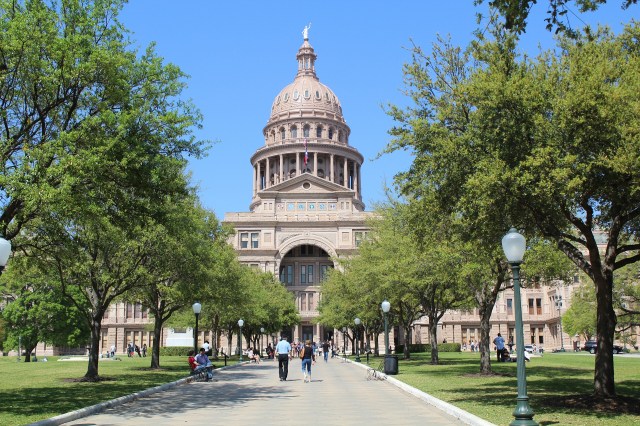
capitol-96827_1920
The Texas State Capitol in Austin

We have many friends and relatives going through their own unique processes of figuring out where they stand in the current election year. We recently spoke with some of my wife’s very good friends from high school who hail from North Dallas and now make their homes in Austin. One of these friends is an avid supporter of a well-regulated militia and the right to bear arms, and in recent years he has felt more and more politically at home in the Libertarian Party. We had a great conversation with him and his wife in which we assured him with good humor that we Democrats do not have a plan or a desire for wholesale gun confiscation. We talked about the hands-off philosophy of the Libertarian Party—including on the topic of women’s reproductive rights, and in a very cogent way, our friend made the case from a very centrist point of view why it was essential not to revoke a woman’s ability to make this decision. He’s not the only one we’ve talked to who is thinking third party. I had a useful conversation on Facebook of all places, with a younger cousin who lives in Virginia and is also supporting and voting for Johnson. The former New Mexico governor’s pro-choice stance was a surprise to her when I mentioned it. Most of the time social media can be a disaster in terms of political discussion. In this case, with the right sensibility, I learned about who she was supporting and why, and she learned an important unknown detail about her candidate. We cannot and should not try to talk politics with everyone, but we need to do it at times with those in whom we have an investment—even when there’s a big risk of discomfort.

I want to go back to one day in 1994 for a moment. I remember being at my grandparents’ house with my dad and Bud when I learned something that really surprised me. I vaguely remember Newt Gingrich making a speech on television, and some political talk brewing between me and my grandfather. As if in a refutation of something I’d implied, Bud mentioned very casually but pointedly that he had voted for Bill Clinton in the ’92 election. I was genuinely amazed. I remember saying to my dad a little afterward, “I can’t believe it…he voted for Clinton!?” My dad caught the significance of what I was focusing on, and he commented that his father had always maintained his own way of doing things. Even to this day, I continue to be surprised at this strategic and understated political choice of variance from decades of his thinking. It turned out that this last presidential election in which he would be alive to vote was my first vote. Our debates within the family would never be quite as challenging and rich after we lost him in 1995. I’m glad that Bud was spared having to live through events like the September 11th attacks. I believe that he would have been exasperated at this insulting campaign by Trump as nominee of the party that he strongly favored. I think that he would have seen it as a vacant exercise of ego. Either way, I still wish I could have one more debate with him and with my dad as well.

These times have made me ask questions about the fundamental conditions and political assumptions in this country. My wife has very close friends who have worked in politics in the District of Columbia, and their insights and direct knowledge of the process have been particularly interesting. I’ve seen the wave of support for Bernie Sanders, and I want to ask the Sanders supporters, will you follow through on a long term effort to advocate for what he championed? Will you vote in mid-term, presidential, and local elections for credible candidates and work toward incremental progress when “revolutionary” change is unlikely? I wonder when religiosity and evangelicalism will stop being such a central driver of Republican party assumptions. When I look at my adopted home city of Austin, I wonder how long we can pollute the atmosphere and degrade the air quality with this gigantic and growing squadron of gas-guzzling cars on the road. I’d like to see less of an emphasis on thinly veiled partisan issues such as in-person voter fraud and more attention to rewriting our narcotics laws and reforming our criminal justice policies. We cannot incarcerate our way to a better country.

Ultimately, our political situation and the risk of electing a Trump represents a failure of education. We haven’t taught our citizens how to identify and rebuff flimsy emotional appeals. We are demonstrating a national failure of critical thinking. The situation may not portend the end of the Republic, but we still need to do a lot of work. Part of this work is talking about politics with realism, sincerity, and the willingness to acknowledge when the other side is right. I admit that I’m not open-minded about some topics. I have believed firmly since 2004 that gay marriage was constitutionally supported and that it was an inevitable and appropriate right in this country. I won’t be changing my mind on that topic just as I won’t change my opinion on the institution of slavery and the harm caused by Jim Crow laws. However, if anyone has a reasonable case to make on any of our emerging national or local issues, I’m open to having a conversation. To everyone who has talked politics with me over the years, thanks for sharing your experiences as well as your opinions. I believe that communication is essential to maintaining our well-being and our freedoms.

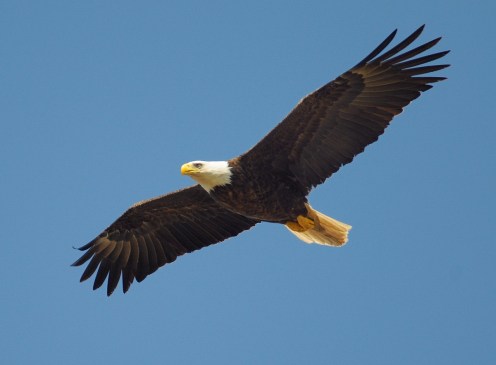
eagle-864725_1280


The Many Sounds of Jazz – Part 2

Having shared in Part 1 a few of my favorite jazz albums from the bebop and post-bop period, I would like to share these selections that cover big band jazz and also albums that span the mid-’60’s through the 21st century.

To the Limits of Orchestral and Big Band:


1. Thelonious Monk Big Band and Quartet in Concert (1963, Columbia)

This is a double CD recording of Thelonious Monk with an outstanding band performing live at Philharmonic Hall in New York. Monk performs adroitly for what sounds like a packed house, and Butch Warren’s bass sounds golden. Drummer Frank Dunlop has some really crisp and rhythmically coordinated solos on the album, and the brass and reed soloists including Thad Jones and Steve Lacy are in superb form. One of my favorite cuts is Monk’s solo piano rendition of a song I’d never heard before or since, “When it’s Darkness on the Delta.” It is five minutes of good humor, philosophy and storytelling all delivered solely through the medium of black and white keys. For some it might be a stagey, inaccessible album; I think of it as a high-water mark in the history of the music.


2. Charlie Parker with Strings: The Master Takes (Recorded 1949-1952, Verve)

These recordings are a treasure trove— a double album’s worth of legendary alto saxophonist and composer Charlie “Bird” Parker improvising and soloing with full symphonic support and the great Buddy Rich on drums. The sound of the harp creates an almost heavenly feel to the proceedings, and the material is almost exclusively pop songs and show tunes performed with Bird’s sense of aplomb and inventive faculties in full effect.


3. April in Paris (1956, Verve) – Count Basie and His Orchestra

While I don’t have deep experience with Basie’s impressive discography, this album has all the punch and sophistication one could ask for in big band jazz. One of the subtle delights is Freddie Green’s acoustic guitar giving the music a wonderful pulse (joonk-joonk-joonk), and the horn players can really rip with precision. Basie sounds right at home on piano, and the album is a classic that evokes a bygone era of vibrant music.


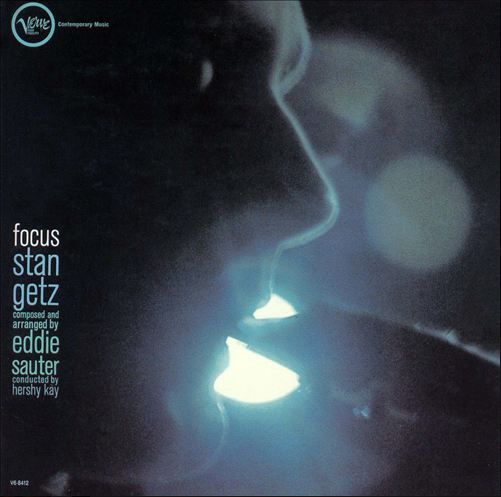
4. Focus (1961, Verve) – Stan Getz / Arrangements by Eddie Sauter

Focus cover

A year before his famous excursions in Brazilian jazz, tenor saxophonist Stan Getz recorded this album with a group of string musicians. Getz plays solos on this album like a man with wings, gliding and swooping as the violins and cellos bow and pluck in perfect coordination behind him. The opener “I’m Late, I’m Late” riffs on Alice in Wonderland’s elusive rabbit, and Getz imbues the music with grace and grit while the outstanding Roy Hanes drums like some kind of harmonizing sharpshooter. Building on the groundwork of Charlie Parker with Strings, this impressive album is almost cinematic in its sound and design—listening to it is the musical equivalent of watching a great Kurosawa or Hitchcock film.


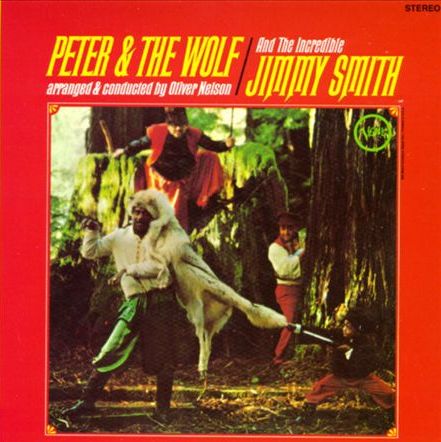
5. Peter and the Wolf (1966, Verve) – Jimmy Smith / Orchestra Conducted and Arranged by Oliver Nelson

Full Peter & Wolf

This is Prokofiev’s classic symphony with no narration but plenty of inspiration and improvisation added by Nelson and Smith. Jimmy’s Hammond organ, the electric guitar, and the bass of Richard Davis all bring a classic rhythm and blues quality to these proceedings. Smith really revs up the engine on some blues-drenched solos, especially on “Peter’s Theme.” The whole album is a knowledgeable tribute and a genuine adventure in musical cross-pollination.


6. Movin’ Wes (1964, Verve) – Wes Montgomery

This album pairs the great guitar octavist (in my enthusiasm I’m coining words now) Montgomery with a full orchestra with arrangements by Johnny Pate. Wes’s guitar hums and sings on every tune, and the album is heavy on pop tunes and latin-flavored tracks. My favorite of the bunch is Wes’s philosophical take on the Streisand associated song “People.” Bobby Scott provides thoughtful accompaniment on piano, and the brass really gets it going on quite a few tracks. The album manages to be both fun and accessible as well as distinctly true to the musical instincts of the one and only Wes.


7. Change of Scenes (1971, Verve) – Stan Getz & The Boland-Clarke Big Band

Ten years after the amazing Focus recording, Getz teamed up to make an avante-garde big band recording with Francy Boland and Kenny Clarke’s gifted group. You read that correctly: avant-garde big band recording. This album is not for the faint of heart. It’s not a noisy, cacophonous wall of sound kind of thing, but rather a very strategic blend of melodies, moods, and dissonant sound sections. Basses are acoustic and electric. Reeds include oboes and soprano saxes. Boland wrote all six tunes—and they’re brilliant! Getz solos bravely and confidently in this strange world. Exciting and off the beaten path.


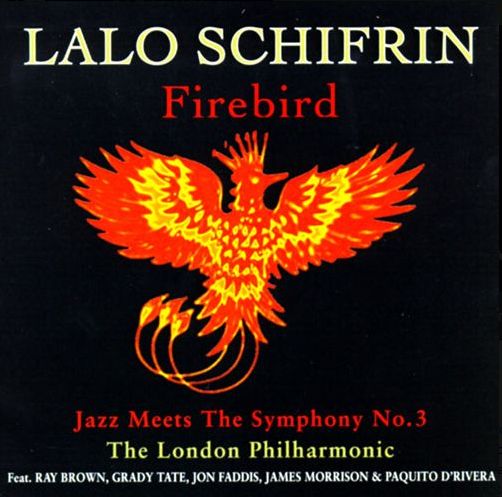
8. The Firebird: Jazz Meets the Symphony #3 (1995, Aleph) – Lalo Schifrin
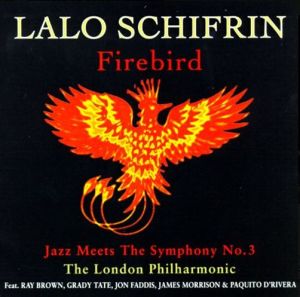
Full Firebird

For an adventurous but well-constructed fusion of classical music with jazz, look no further. Lalo Schifrin, jazz pianist and composer extraordinaire provides a remarkable musical integration that brings together such selections as Bud Powell’s “Parisian Thoroughfare” with Gershwin’s “An American in Paris.” Jon Faddis’s trumpet sounds great in the service of Schifrin’s charts and adapted tunes. “Vignettes of Fats Waller” has lots of pomp and presentation to it, and the gifted saxophonist Paquito D’Rivera performs magnificently on the album’s extended finale “The Firebird,” which pairs Stravinsky’s work with the music of Charlie Parker.  a very complete and robust set of musical portraits.


 9. Concerto Grosso in D Blues (1968, Atlantic) – Herbie Mann

This album journeys through aspects of jazz from the traditional to the avante-garde but with a chamber music feel that in no way diminishes the passion and intensity of the themes. The title track is a full 28 minutes long, and features melodic opening and closing sections that bookend the “outside” yet contemplative middle section that features Sonny Sharrock’s electric guitar solo. Herbie’s flute solo on “My Little Ones” is full of improvisational fire. Also, along with Ron Carter’s resonant bass, the great Roy Ayers is featured on vibraphones in this genuinely accomplished recording.


10. Consummation (1970, Blue Note) – The Thad Jones / Mel Lewis Orchestra

Thad Jones is a richly creative trumpet/flugelhorn/cornet player who also happens to be one of Jazz’s greatest field generals in the art of big band arrangement. He and his drummer co-leader Mel Lewis are a superb team, especially with the buoyant support of pianist Sir Roland Hanna. This music has a blend of funkiness (apropos of the time), whimsy, and at times a strong sense of tradition and ceremony. “A Child is Born” is a landmark ballad and a highlight in Thad Jones’s career as a composer (as is the entire album—he wrote every single composition).


11. Close-up in Swing & A New Kind of Love (1961 & 1963) – Erroll Garner

I couldn’t resist the inclusion of this 2-for-1 CD released by Telarc Jazz in 1997. The ’61 session Close-up in Swing is a very delightful trio recording, but the music with Garner and orchestral support on A New Kind of Love is an outstanding work of big band jazz that expertly realizes this romantic soundtrack. The subject was the Paul Newman/Joanne Woodward film of the same name for which Garner composed most of this music. A New Kind of Love is an album that sneaks up on you—it is simply rapturous in its evocation and painting of nights on the town and lovers strolling in the park. I’ve never seen the film, but this music is worth more than the proverbial thousand words. The 5’4’’ Erroll Garner was a giant in the annals of jazz music, and in this pair of recordings, that fact is fully on display.   


Beyond the Conventions of Post-Bop


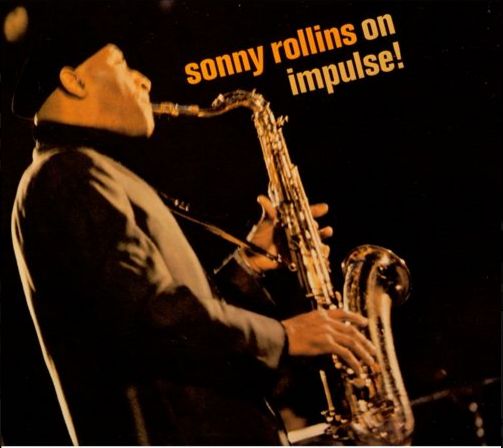
12. Sonny Rollins On Impulse! (1965, Impulse)

Full Sonny Impulse

What a great supporting group to back the masterful Sonny Rollins on this album. Nobody in this rhythm section is phoning it in. Ray Bryant plays some gorgeous piano, and Walter Booker plays a stunningly sensitive bass solo on the extended take of “Everything Happens to Me.” The opener “On Green Dolphin Street” has a probing, almost harrowing intro with Sonny’s horn saying, “Wake up! This isn’t your standard jazz album, folks.” Mickey Roker uses brushes and cymbals with such poise and provides the punctuating thwacks right where they’re called for. All this and there’s a calypso! Fifty years after it was recorded, this album still sounds as innovative and persuasive as ever.


13. Mercy, Mercy, Mercy! (1966, Capitol) – the Cannonball Adderley Quintet

Josef Zawinul’s title track broke through with some radio airplay and brought Cannonball fame beyond just the jazz audience. Nat Adderley’s “Games” is a particularly driving tune, on which Nat’s cornet is full of power and swing. All of the material is original and penned by group members. Cannon’s alto saxophone and the performances serve as a bridge of soul music and jazz with vibrant results.


14. Light as a Feather (1972, Polydor/Verve) – Chick Corea & Return to Forever

This much-revered album is a thorough illustration of all the places that jazz can go. Corea’s electric piano is a repository of joy and virtuosity, and the vocals of Flora Purim are a superb complement to the instrumental skill on display. One of my favorite elements of the album is Joe Farrell’s flute, which really helps to make the track “Spain” the monumental work that it is—along with the superior bass performance of Stanley Clarke.


15. Miles Smiles (1967, Columbia) – The Miles Davis Quintet

This is a modern jazz super-group performing at peak creativity. Tony Williams is about 21 years old and sounds like a masterful veteran on drums. Wayne Shorter, Herbie Hancock, and Ron Carter all contribute to an interplay along with Miles that fulfills the cliché “more than the sum of its parts.” This album introduced Shorter’s classic “Footprints,” and the rendition of “Freedom Jazz Dance” ripples with attitude and insight. Not always easily accessible, but it is vivid, transcendent music.


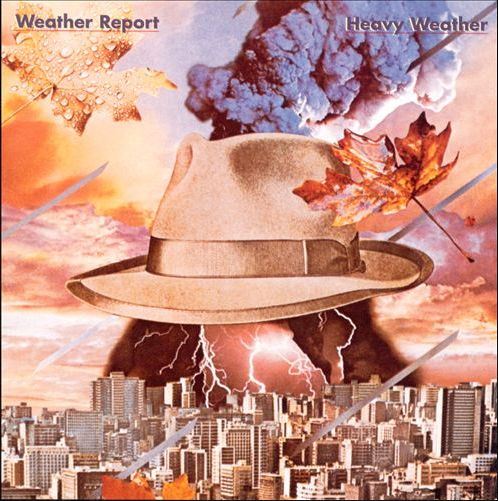
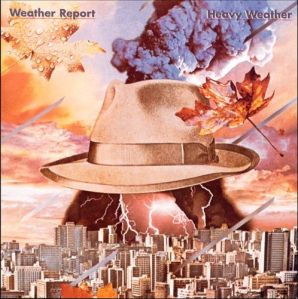
16. Heavy Weather (1977, Columbia) – Weather Report
Full Weather

There was no way that this album wouldn’t make my list. It’s hard to listen to “Birdland” without feeling great happiness, and it’s difficult to listen to “A Remark You Made” without wondering if it is the closest approximation to heavenly beauty that is available in musical form. Jaco Pastorius plays electric base like an avatar from the Platonic realm of forms on “Teen Town,” and Zawinul’s keyboards sound like science fiction and magic. Drummers Acuna and Badrena provide crisp textures and propulsion. Wayne Shorter’s “Harlequin” is attractively surprising, and his “Palladium” shines like a funky new element. An unassailable and enduring classic.


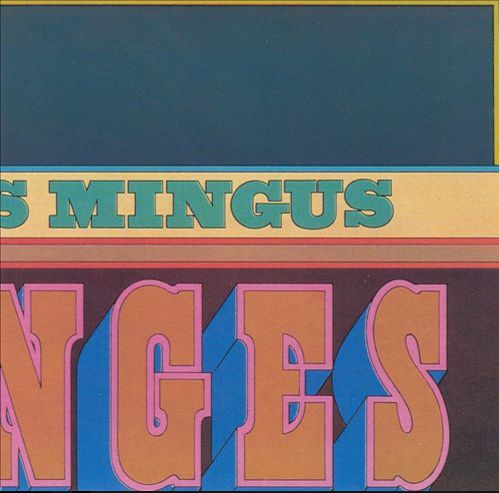
17. Changes One (1975, Rhino) – Charles Mingus
Full Mingus

This album, along with its sibling recording Changes Two, showed how much acoustic jazz still had to offer well into the era of electronics and r&b music. Bassist and composer Mingus had the personality and musical genius of an angry titan, and all of his seriousness, provocation, and depth come through here. Piano player Don Pullen is particularly important in his role as a rich melodist and a champion in the use of targeted dissonance. The 17-minute “Sue’s Changes” (titled in honor of Mingus’s wife) is an adventure in jazz—swinging, snappy, chaotic, and moving, each in different sections. Georgie Adams is the tenor saxophonist who also sings a raspy vocal on “Devil Blues,” which craftily sends up the new-agey notions of the time with cynical imagery and mocking lyrics. The closer, “Duke Ellington’s Sound of Love,” eschews all tonal harshness and provides one of the most gentle and beautiful jazz lullabies that you will ever hear. This song is a Mingus original that weds melodic elements of Duke Ellington’s “Solitude” with Billy Strayhorn’s classic “Lush Life.” Mingus was one of the most intelligent and complicated minds in music history.


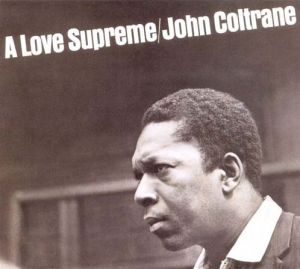
18. A Love Supreme (1964, Impulse) – John Coltrane
Full Supreme

One of the most spiritual albums of all time, this music has been a guiding light of influence on generations of jazz and rock musicians alike. One section of the album is called “Pursuance,” and this term perfectly captures the sincere and yearning quality to the music. There are very few stylistic tricks or recognizable, jazzy contrivances here. It’s pure music that feels like the voyage of a lifetime. Coltrane, composer of all sections, plays the tenor saxophone, and the rhythm section supports his spiritual transits with perfect empathy and skill.


19. Don’t Ask (1979, Milestone) – Sonny Rollins

This album introduced me to Rollins’s incredible ability to play tenor saxophone along with the astounding guitar mastery of Larry Coryell. The opener “Harlem Boys” is a perfect jazz-funk opus—ready made for dancing and fully equipped to improve one’s spirits. Coryell’s “The File” is a street-smart vehicle for a duet with acoustic guitar and tenor sax. The song “Disco Monk” was apparently an inside joke/throwaway tune. For me, it’s pure platinum complete with tempo changes, varied instrumentation, a monster sax solo, and my favorite electric guitar solo in any genre. The closer “And Then My Love I Found You” is high-powered funk-jazz romanticism. My rejoinder to the album’s title is, “Just listen.”


20. Night Passage (1980, Columbia) – Weather Report

Only Joe Zawinul could blend strange synthesizers and things called “Dream Clock” with Duke Ellington’s “Rockin’ in Rhythm” and obtain very formidable and coherent results. This Night Passage is a very intimate journey into the heartland of jazz via electronics and cosmic atmospheres. Wayne Shorter’s “Port of Entry” and Zawinul’s “Fast City” have a sense of mystery and action about them that always has me coming back for more. My favorite track here is Jaco Pastorius’s “Three Views of a Secret” (what a great title!)—the tune really builds and comes from different angles, and Shorter lays down a saxophone solo that seems to channel exactly the feeling that Jaco wanted to create. This is a very good recording by a master group of artists.


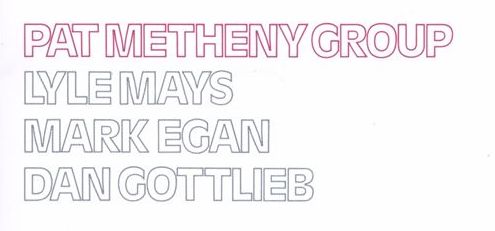
21. The Pat Metheny Group (1978, ECM)

Full Partial Metheny

Pat Metheny is certainly one of the most accomplished and successful musicians in the history of jazz. This album was the beginning of his phenomenal and always expanding career as a leader, and it introduced both his lyrical guitar style and his decidedly moving ability to take his listeners on a journey, song by song. The opener “San Lorenzo” sounds like a radiant and arresting place to visit, and the electric bass of Mark Egan never lets us forget how pretty that instrument can sound. This album is the opposite of avante-garde in a very good and powerfully creative way. The music is folk and country tinged while also having great mini-hooks and riffs, yet it is somehow squarely in the jazz tradition—because jazz’s tradition is to grow and constantly show that creativity and improvisation have limitless places to go.


New frontiers in Music


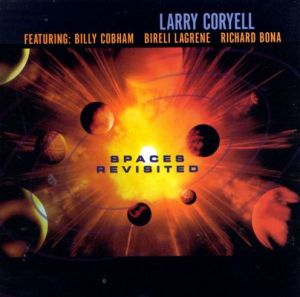
22. Spaces Revisited (1997, Shanachie) – Larry Coryell
Full Spaces

On the original recording Spaces in 1969, Larry Coryell teamed up with the gifted John McGlaughlin for a cosmic-themed guitar summit meeting. Here, Coryell and the drummer from that earlier session, Billy Cobham, reunite and explore new quadrants of the jazz galaxy with guitarist Bireli LaGrene and bassist Richard Bona. The set list is astoundingly well-chosen, featuring Sonny Rollins’s “Oleo,” Bonfa’s “The Morning of the Carnival,” and Thelonious Monk’s gem “Ruby, My Dear” among other notable selections. The instruments sound vibrantly fluid in the hands of these players, and the guitars hum with celestial beauty. This album is quite an effective way to examine the deep spaces of true jazz improvisation.


23. Tango: Zero Hour (Recorded 1986, Nonesuch) – Astor Piazzolla

This masterful recording is the culmination of years of writing and orchestration by Argentinean Tango music genius Astor Piazzolla. It is a revolutionary, jazz-inflected approach to Tango music, and Piazzolla’s group famously enlivens the music with intriguing bits of percussion and sound effects via unorthodox use of the instruments. Piazolla plays the bandoneon, a smaller alternate version of the accordion, and the electric guitar in the group contributes to the modernity of the group’s sound. Piazzolla is the writer of all tracks on the album, and the music is positively electrifying, particularly if one enjoys music that conveys a sense of intense romance and adventure.


24. Earfood (2008, EmArcy/Universal) – The Roy Hargrove Quintet

Opening with a stirring rendition of Cedar Walton’s “I’m Not So Sure,” this album maintains a high level of artistry throughout the proceedings. Hargrove’s trumpet has plenty of beauty and bite to it, and the supporting cast really cooks up some great flavors with him. Immerse yourself in “The Starmaker”—it’s a composition of unwonted beauty. “To Wisdom the Prize” has wonderful shades of Freddie Hubbard, and the final tune blows things out with a Sam Cooke classic.


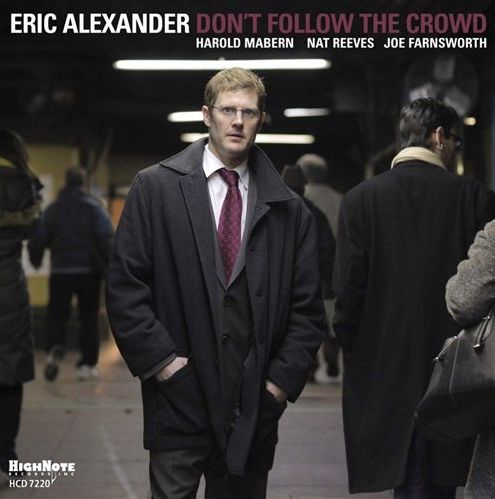
25, Don’t Follow the Crowd (2011, High Note) – Eric Alexander
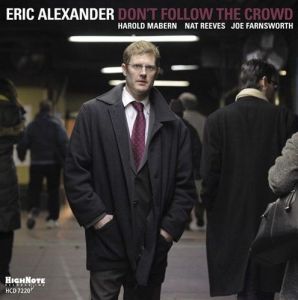
Full Crowd

Tenor saxophonist Eric Alexander and pianist Harold Mabern are a very skilled duo when it comes to melodizing in the jazz context. This album incorporates uncommon items such as the theme from the 1960s movie Charade with Gordon Parks’s somber gem “Don’t Misunderstand.” Mabern’s piano playing is excellent on “Footsteps,” and the tune is reminiscent of some of the soulful, modern craftsmanship of Cannonball Adderley’s superb groups. I once saw Eric perform live at the Philadelphia Art Museum in the early 2000s, and his musical instincts are well-honed. This album is a 21st century illustration of how great acoustic jazz can be.


26. Highway Rider (2010, Nonesuch) – Brad Mehldau

This album by the brilliant pianist Mehldau makes use of a gifted set of string musicians and the very capable tenor saxophone of Joshua Redman to deliver some serious high-concept jazz. It is a double CD that runs the gamut between very listenable, melodic tunes and somewhat more bracing and exploratory sounds at times with an epic soundtrack feel to it. On disc one, “The Falcon Will Fly Again” conveys a sense of hope and revelry as hand-claps and vocal la-la-la’s help to bring the number home. My favorite is “Sky Turning Grey (for Elliott Smith)” in which Mehldau’s piano, Redman’s tenor, and the drummer get to cooking on one of the catchiest melodies I’ve ever come across. This is truly intelligent music that makes a strong statement.


27. Gerald Albright Live at Birdland West (1991, Atlantic)

Mr. Albright has quite a way with the saxophone—both tenor and alto. His performance on the Coltrane tune “Impressions” is very potent and catchy, and the album is an interesting blend of straight-ahead jazz with some touches of r&b, strings and some atmospheric synthesizers on a few of the cuts that work pretty well. The performance of “Georgia on My Mind” is rich in musical passion and bluesy warmth, featuring a captivating organ solo by Patrick Moten and Albright’s balladry on reeds. Patrice Rushen and Joe Sample are also heard to great effect on keyboards on a few of the selections, and Albright’s playing is very confident and listenable.


28. Sci-Fi (2000, Universal/Verve) – Christian McBride
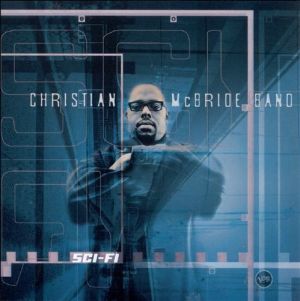
Sci Fi cover

As a fan of both science fiction and great jazz, this album works quite well for me. Philadelphia’s Christian McBride is a superior musician on both the acoustic double bass and the various forms of electric bass. This album provides a stirring look at his interpretations of the music of Sting and Steely Dan while also proffering very catchy originals. Dianne Reeves contributes a distinctive wordless vocal on “Lullaby for a Ladybug,” and Christian’s bass solo and overall performance on Jaco’s tune “Havona” are absolutely breathtaking. To put it in chess terminology, Christian McBride is an international grandmaster of jazz.


29. Road Shows, Vol. 1 (Recorded 1980-2007, Doxy / EmArcy) – Sonny Rollins

Sonny Rollins is an inspiring artist who embodies respect and appreciation for the music’s pioneering forerunners while he also proceeds boldly according to his own muse. These selections from a period of two and a half decades of Sonny’s work put forth music that is scintillating and magnetic. The classic ballad performances are lilting and accessible. The mid- to up-tempo originals are revelatory. “Best Wishes” is the opener that bursts with enthusiasm and drive, and “Blossom” struts some of Sonny’s best stuff on tenor saxophone with a Latin flavor and superb interplay with the talented Mark Soskin on piano. I consider myself lucky to have this kind of musical document of the Rollins magic during the second half of his great career.


30. Tokyo ‘96 (1998, ECM) – The Keith Jarrett Trio

This outstanding trio recording is also thoroughly accessible. It can be played for the enjoyment of a wide audience because Jarrett does not try to befuddle the listener with virtuosity and technique at the grand piano. The group understands each other, and their takes of these standard tunes make for very rewarding listening. It’s a classic acoustic piano trio that builds on the great tradition of masters such as Bill Evans, Bud Powell, and Tommy Flanagan.


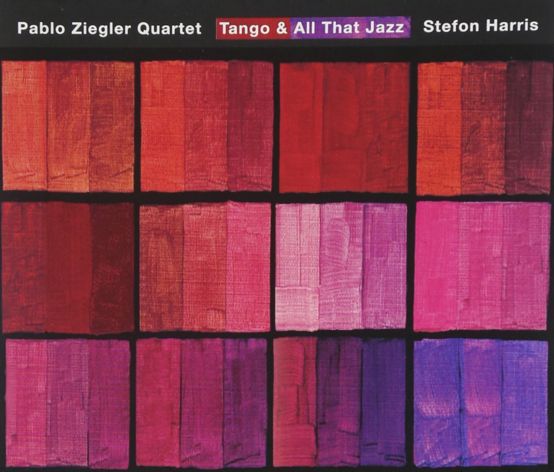
31. Tango & All That Jazz (2005, Kind of Blue)
The Pablo Ziegler Quintet w/ Stefon Harris
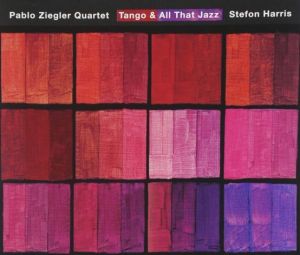
Tango and Jazz

The music is spontaneous and yet rich in ceremony—a festival of sound with impeccable precision. 19 years after performing on Tango Zero Hour with Astor Piazzolla, pianist Pablo Ziegler anchors his own group and introduces several brilliant original compositions on this album. Pablo also has a secret weapon in the person of brilliant vibraphonist Stefon Harris as a special guest. On the Piazzolla classic “Michelangelo ’70,” Harris plays my favorite vibraphone solo that I’ve ever heard on a record. The whole affair is expertly conducted, and the passion, reflection, and creativity displayed in this album deliver a superb musical experience.


A Note:

No list can ever capture all of the greatest music, so I’m simply giving some special and sometimes unfair attention to albums that have captured my interest and moved me. Jazz is a very collaborative and disciplined music, and yet it is also remarkable for its skyways of freedom. In this way it will always be an important part of American culture for me. Jazz is not a superior form of music over others—it is a certain way of doing things musically. This way, this path is always new to me, and I am thankful to all of the musicians such as Sonny Rollins, Ella Fitzgerald, Cannonball Adderley, and Art Blakey who have served as champions and ambassadors of this art form.


A Few Other Notable Jazz Recordings:

Study in Brown (1955, Emarcy) – The Max Roach / Clifford Brown Quintet

Time Out (1959, Columbia) – The Dave Brubeck Quartet

Ellington At Newport (1956, Columbia) – Duke Ellington and his Orchestra

We Insist! Freedom Now Suite (1961, Candid) – Max Roach with Abbey Lincoln and Coleman Hawkins

Perceptual (1999, Blue Note) – Brian Blade Fellowship

The Dynamic Duo: Jimmy & Wes (1966, Verve) – Wes Montgomery & Jimmy Smith

Wandering Moon (2000, Sony Music Distribution/Columbia) – Terence Blanchard

Destiny is Yours (1989, Steeple Chase) – The Billy Harper Quintet

People Time (1991, Verve) – Kenny Barron and Stan Getz

5 by Monk by 5 (1959, Riverside) – Thelonious Monk with Thad Jones

The Grand Wazoo (1973, Rykodisc) – Frank Zappa

Francis Albert Sinatra & Antonio Carlos Jobim (1967, Reprise)

The Individualism of Gil Evans (1965, Verve)


From Second Nature to an Earlier Nature

The world of 2016 is a place of pace beyond comparison. It is sometimes as if—through the devices that are now second nature to us—we have all become Wall Street traders of a sort, trafficking in instant information constantly. However, it is still possible to find myself in the original nature, which sometimes I come across unexpectedly within a modern metropolis. In the Capital of Texas, the cars and the rate of urban development can be staggering, but there are many places to experience the city’s commitment to green spaces and beautiful views. My wife recently took me to Mt. Bonnell for a view of the Colorado River from Austin’s highest point. Ironically enough, the technology at which I look askance allows me to share some of the sights without sole reliance on words.

Rock of Mt Bonnell
The engraved rock of Mt. Bonnell dated 1938

Detail of Bonnell view


After climbing the long stone steps and seeing the engraved rock on the star, visitors can see the view of Lake Austin from rocky trails that incline along the “mountain.”


Sunset light catching the trees of Mount Bonnell along Lake Austin of the Colorado River

Elsewhere in the city, working its way in a meandering fashion toward the larger tributary, the Shoal Creek abides, very easy to miss completely if one isn’t exploring and open to such an understated and quiet flow of water coursing within the city.

Near 6th Street downtown, Shoal Creek is flanked by the deep greens of summer
Near busy Lamar Blvd downtown lies the Shoal Creek walk flanked by the refulgent green of summer

If you choose to walk along the water south toward Ladybird Lake, the terrain is broken and has the feeling of a forgotten place—although I am certain that it won’t stay just this way forever…

Shoal Creek below 5th St

The downtown city buildings loom over the water near 6th Street as the creek bends.


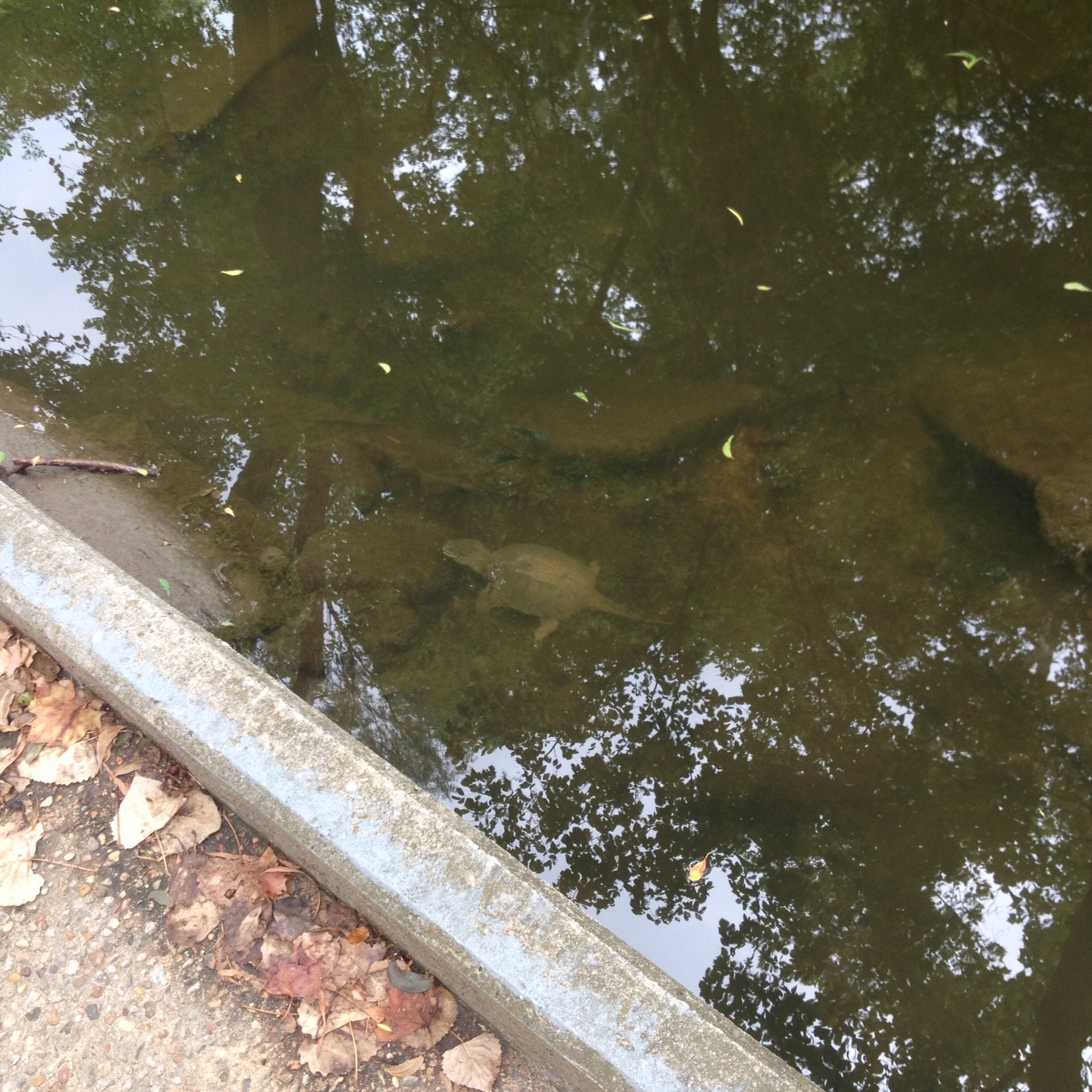
Turtle in the creek

Watching for movement below the surface in the parts of the creek that are knee-deep, I occasionally see tiny fish zipping about or a turtle in its habitat, and it’s clear that the little creatures who live here are also being watchful in return.


To 38th St post

Walking northward and tracing toward the source of the flow, the path winds between the water on one side and the streets on the other. Signposts may provide a sense of direction and possibly hearken to an older time when maps and guides were not virtual but instead physical, showing the smudges and marks of wear.


Past the football field at House Park and just beyond 12th St., one can cross from Lamar Boulevard over the creek bank on the foot bridge to Pease Park, one of the city’s best places to experience the outdoors.

The bridge to Pease Park

Pease Park and it’s accompanying green belts along the creek bring us into the realm of an older Austin and its time as a town once named Waterloo in the first half of the 1800s. According to local sources, in the 1840s a Mexican invasion took place at one point, and a number of skirmishes occurred between European settlers and Native Americans. I have read that Robert E. Lee and soldiers under his command once camped along Shoal Creek, and apparently during Reconstruction, General George Custer and his men were stationed here as well. In 1875, Governor E. M. Pease and his wife conferred the land of Pease Park to the citizens of Austin.

1875 Pease Park date sign

Purple flowers in the park


This park is the site of an Austin tradition: Eeyore’s birthday party. The famously oft-forgotten cumpleaños of Winnie the Pooh’s sad donkey friend are celebrated with great cheer in the park annually. The protectors of the park certainly deserve their due for contributing to and maintaining its natural beauty.


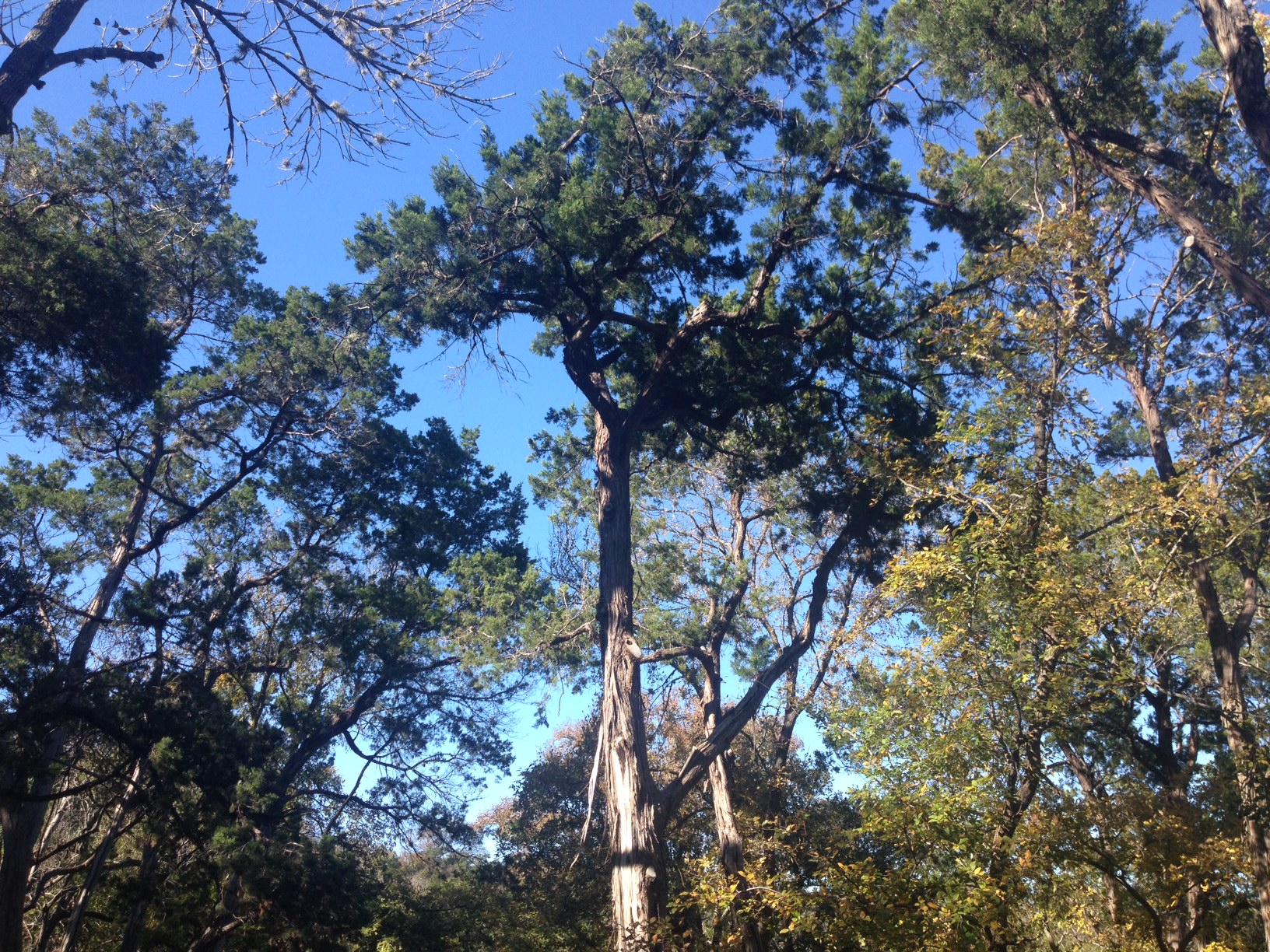
Tree canopy in Pease Park

Beneath the canopy of trees I have more than once thought of my family in Pennsylvania, New Jersey, Florida, California, and in Northern Ireland and here in Texas as well as those whose location can no longer be named.


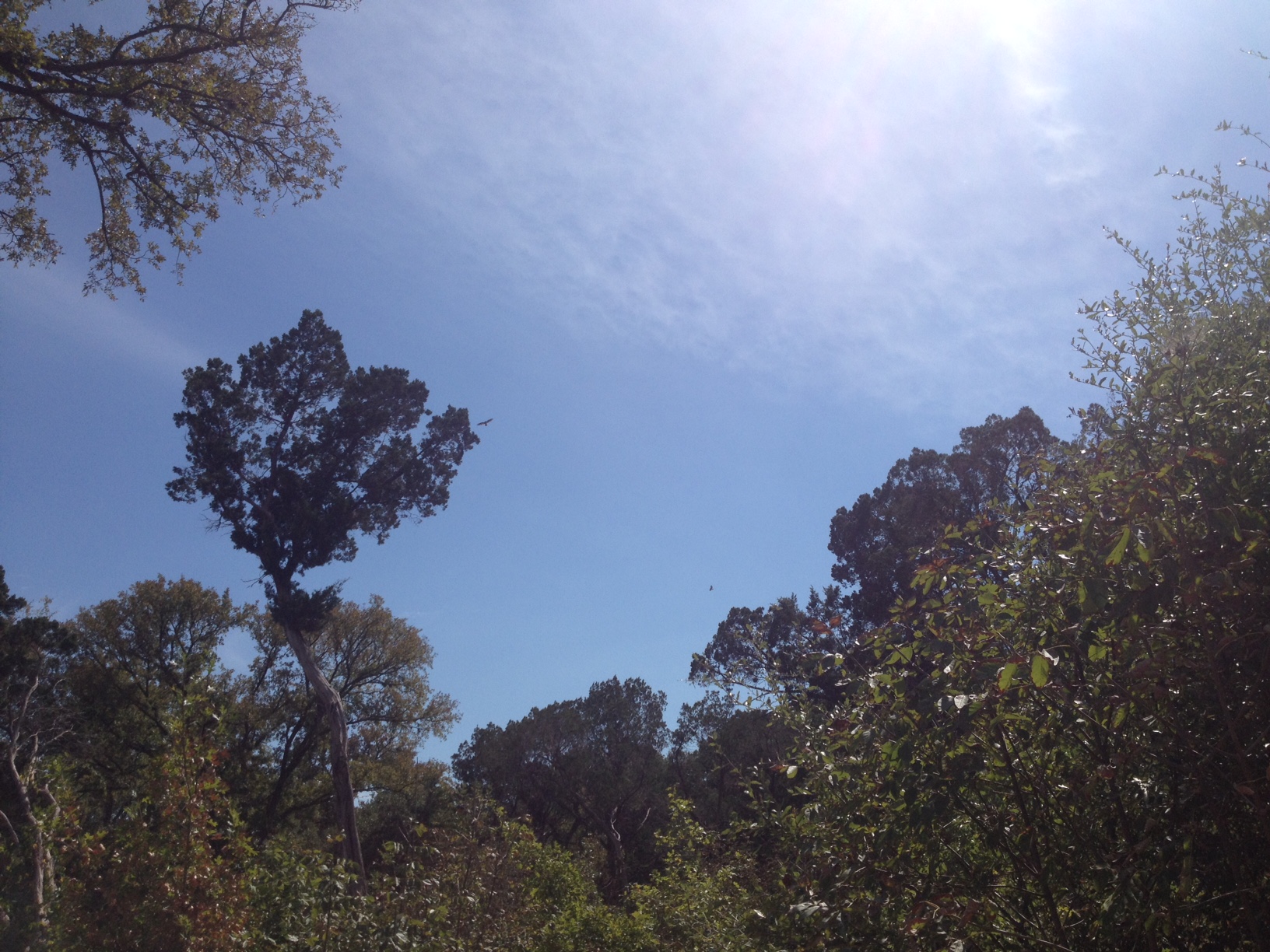
A barely noticeable hawk glides in the blue sky
barely noticeable hawks glide high above


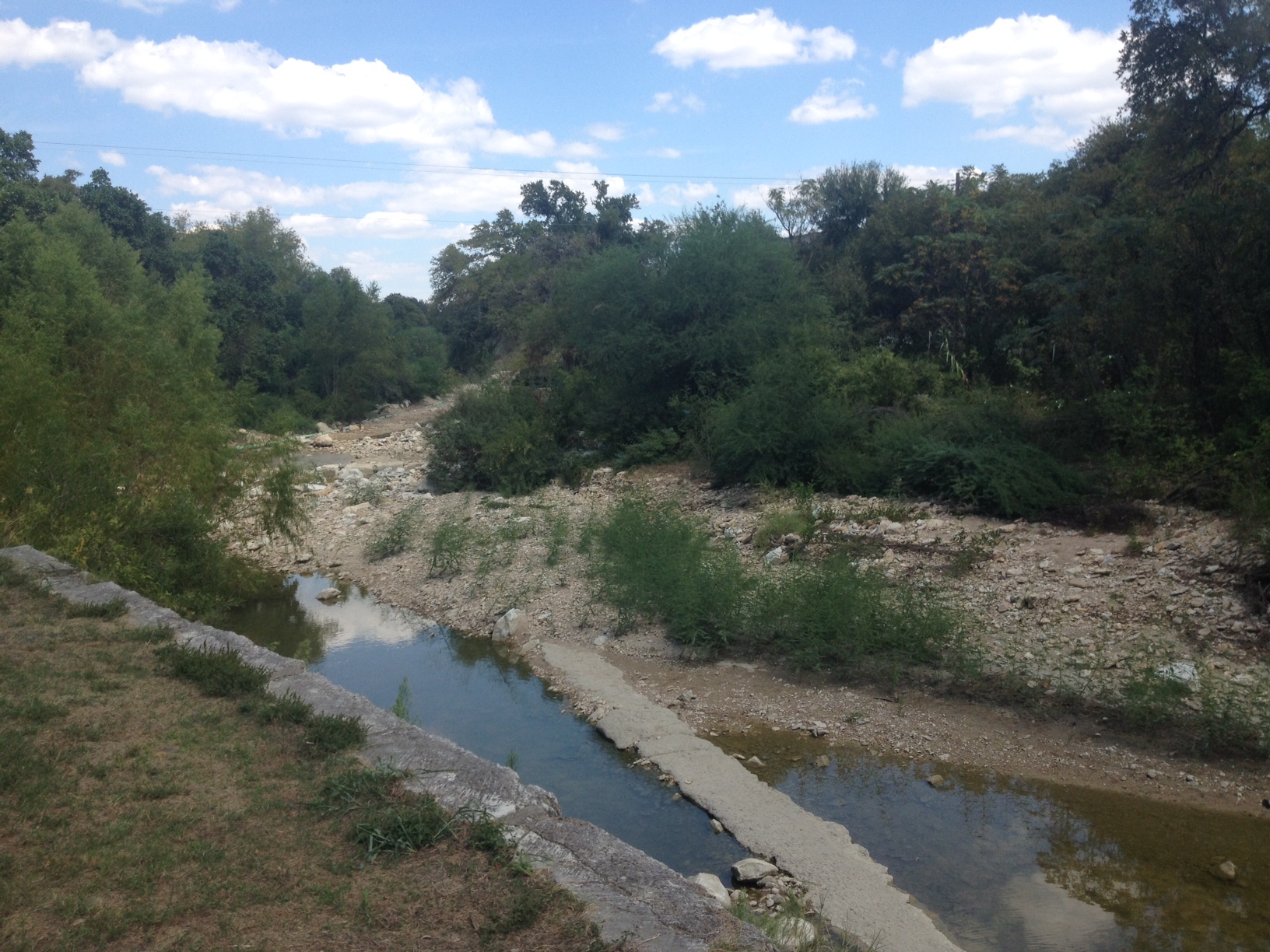
Shoal Creek park view


At times, walking along the creek can provide the illusion of being far away from civilization while in reality being firmly within the city limits.


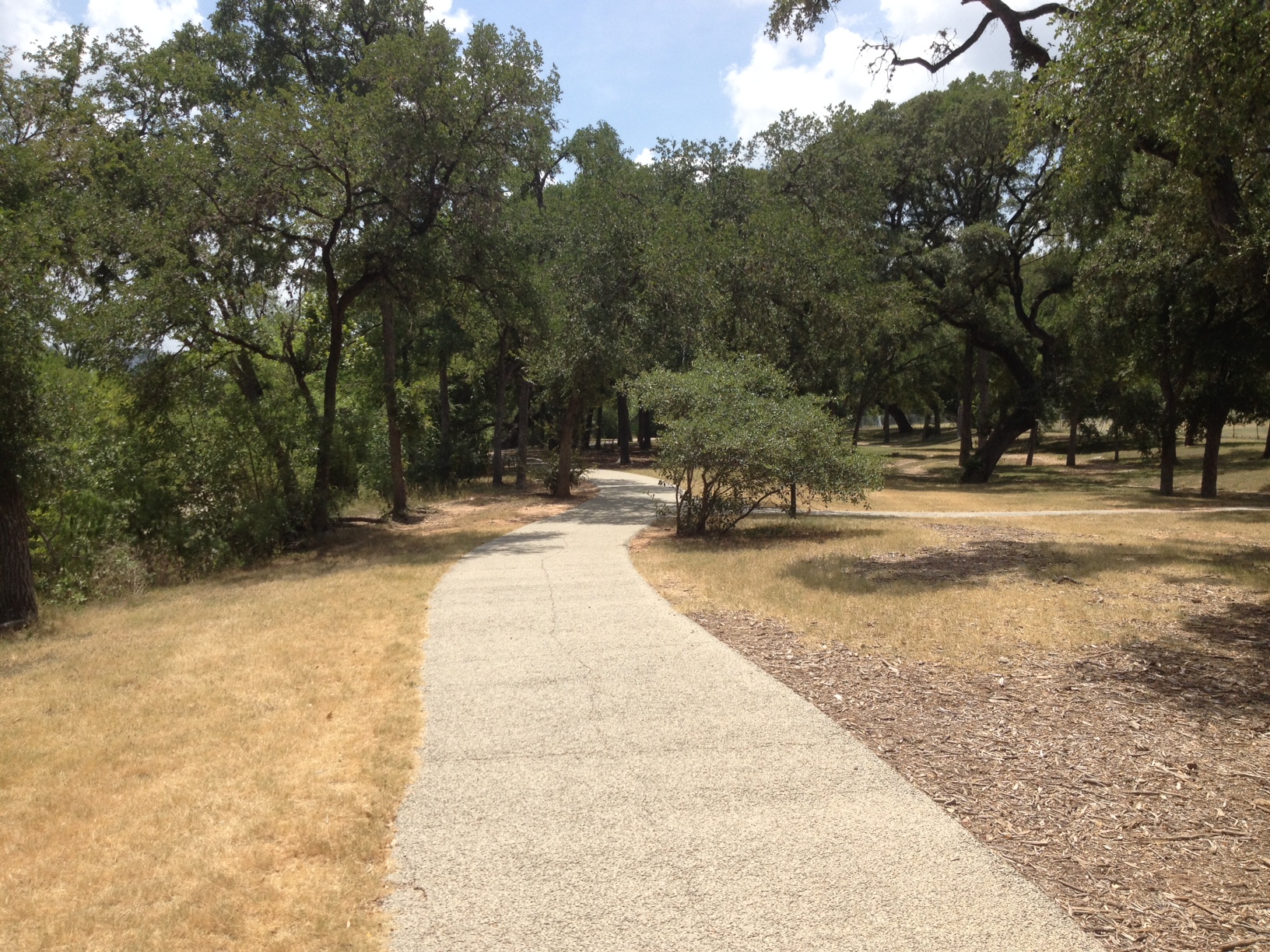
Clear path in Pease park


Eventually, the heat of Central Texas turns the grass to a dry, golden color as the summer progresses…


The path winds on, and as it does, I notice that summer is beginning to fade. The colors of fall have been summoned by time and the gradually descending temperatures.

Fall 2015 on the trail

Fall and the wooded path

Before returning on the path, I wish you great luck in finding the places that strike just the right balance of a natural setting and a nurturing experience. May the bridges you cross and the connections you make lead to valuable and welcoming places.

concrete foot bridge over creek

Words and photos by C.S.


The Rockford Files Saved My Life (…maybe that’s a stretch)

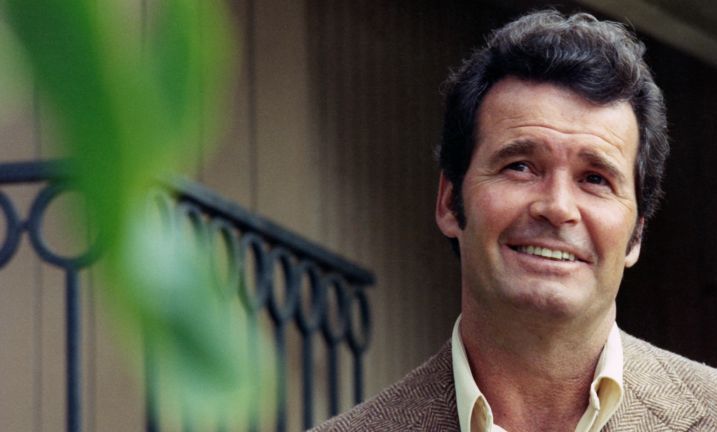
More than once in my life, I have found it a really enjoyable surprise that viewing an old television show or film has sometimes made for a strangely supportive experience when I haven’t quite felt like myself.  I may not be a private detective, a veteran of wartime service, or an ex-con for a crime I didn’t commit, but James Garner’s famous character Jim Rockford seems to have shown up on my screen right at the moment when I needed to see someone who can both roll with a punch as well as improv his way through a harrowing situation.  Since my days as an undergraduate religion major, I have known that storytelling has always played a key role in human culture, and as it turns out, this may even include detective shows from the irrepressible 1970s.

Smiley Rockford
Moving from Southeastern Pennsylvania to Central Texas was the journey of a lifetime.  However, I would have been neglecting a big part of the challenge in this move (and possibly setting myself up for failure) if I didn’t also take a serious look at the emotional side of climbing that particular hill.  It’s not that I underestimated what the move would involve and entail, but it was more of the idea that moving far from the city where one has lived for thirty-four years is not necessarily going to follow a neat script.  At times, an old television episode or a near-forgotten favorite song from decades ago playing on the radio helped me to feel at home in my new part of the country.

My wife and I made our move to Texas at the very end of my seventh year of teaching in an embattled inner-city Philadelphia public high school that had left me yearning for something new in terms of geography and state of mind.  My wife was able to keep her exact same job and move wherever she wanted in the country, so we decided to go with our gut feelings and make a move that would soon put us on a cul-de-sac in a new home that lies on the southern rim of the capital of Texas.  My job was to find a new line of work or a new version of my old one.  I engaged this task thoughtfully but a bit hesitantly, for I am not one to take or quit jobs lightly.  As the summer went on, the mercury went up in a record-breaking way with the scorching heat drying out the sod of our newly lain lawn.  I wasn’t keeping up very well with the basics of being a new Texas homeowner, and having dropped the ball in caring for our lawn, I watched as it lost its green and hopeful color.


Through July 2011, our first full month in our new home, I had some money coming in, my “summer money” for completing the school year that had ended at the close of June, so I didn’t panic.  I felt exhausted from the cumulative experience of those years of teaching while also stimulated and uplifted by our new home and the warmth of the people in our new city and state.  Meredith did a lot of legwork on that newfangled gizmo, the internet, to find me a variety of openings at universities and also information about getting back in the instructional saddle.  After July had passed, I was beginning to weigh more and more the financial pressure of our having bought a new home and fairly recent model used car.  I went on phone interviews, in-person interviews, and final round multi-tiered interviews that required presentations and timed completion of projects.

After searching for a job (and for vital ideas in some new and old books) unsuccessfully in August, things got interesting in the month that marks the turning of the fall.  Suddenly, my wife and I had adopted a rescued puppy, and with Meredith’s help, I had impressed some recruiters and administrators at one of the best and most student achievement-driven charter school programs for high-need students in the entire country.  I taught some sample lessons as a try-out to see if I would work as a permanent teacher for a pair of 9th-grade classes.  It didn’t work out, but it was an educational experience to be back in the classroom with a critical eye applied to my instruction.  I was re-learning that when it comes to searching for something of real value, one often has to put aside the way the search feels and simply persevere.

As a person who can behave overly emotionally, I definitely made my wife feel at times that I wasn’t grateful for her or all the support I had or for living blessings like Jeffrey, our vibrant little puppy.  I’ve always been somewhat like my father, a song-writer who is also very emotionally intense and someone not easily categorized.  Sometimes, I see what I want to see and search for more of it instead of dealing proactively with the parts of life that are not always dramatically rewarding but absolutely necessary.  As I was growing up, there’s no question that my Mom’s example was a yin to some of this yang, but I have never felt that I was using common sense as well as she often modeled it for me.  In September, despite all the positive things going for me, I felt myself off balance and upset about everything from my absence of income to my need to adapt to living in a part of the country where my feet cannot get me much of anywhere that is useful or familiar to me.


One day that September, I played in a few contentious basketball games at the gym where my wife and I work out.  I had some good young teammates, and they seemed pleasantly surprised at the way I was able to score and rebound in the first game that we won.  After winning two games, the third team we played had some guys who were angry that they had lost to us earlier.  I scored our opening basket, and the guy who was covering me was furious for the rest of the game.  I got into arguments with several guys on this opposing team.

Things came to a head when the guy who was guarding me cheated me on a call.  My own teammates didn’t back me up; they simply didn’t know me very well and my arguments with these guys during the game made it look like I was the problem.  Despite these harsh interactions, I stayed as diplomatic as possible, kept giving everybody five, and contributed to our team playing well.  When I was leaving, I gave one last handshake to each of the three guys with whom I had argued.  I did get the satisfaction of winning on this occasion, but I was struggling with aspects of the overall shift that was taking place in my life.

When I was leaving the gym, some of the frustrations of finance, employment, and adjustment in my new home state all came on again with the fresh sting of having been angry and isolated from the other players.  Meredith became saddened as my own self-involvement was beginning to take away the joy of an invigorating outing at the gym.  I put myself on notice mentally to buckle down emotionally and re-spin it positively because quite frankly it was the right thing to do.  If I was upset about a lack of team feeling half an hour earlier, I knew that right there sitting next to her in the car was where the really important teamwork has to happen.

That night I happened to come across a reference in a movie review to the Rockford Files television show.  I was a bit young when the show was on its first run, but I had seen re-runs and knew that all three of my parents had always enjoyed the plots and the humor of the show and its main character played by James Garner.  Garner’s Jim Rockford is a private detective whose back story is that he’s an ex-con, but he wasn’t a participant in the crime for which he was sent to prison.  The cops dislike him even though or perhaps because he is better at solving crimes than many of them, and Garner’s portrait of him combines a low-rent quality with a strange combination of polish, irascibility and eventual genuineness that make him sympathetic.  I am something of a fan of detective shows, so I decided to stream the pilot episode of The Rockford Files, which was fortunately available on the web.  I felt right at home when I noticed immediately that the pilot episode featured Lindsay Wagner, who would go on to become the Bionic Woman—a can’t miss heroine for a boy born in 1972!

Oklahoma Garner targa

I enjoyed watching the program and felt that it had struck a chord.  I watched a few more episodes the next day, and I realized that the virtue of the Jim Rockford character was that he was able to serve as a surprise agent of what’s right in a world that was often wrong.  The world, the establishment had been wrong about him, and he had gone to jail for it.  However, he kept on figuring it out, living in that ridiculously unbelievable trailer on the beach in L.A.  He wasn’t utterly disconnected or adrift—he had a likeable but fuzzy father and several associates, but he had to prove himself nearly all the time to everyone.  In this series, Garner gave us an imperfect champion who was more dynamic than Peter Falk’s steady and inexorable genius as official detective Lt. Columbo and a bit less overwhelmed by a brutal, treacherous world as were 70’s film P.I.’s like Nicholson’s Jake Gittes in Chinatown or Hackman’s Harry Moseby in Night Moves.  I know that the small screen requires a winner each week, and yet what mattered was how Rockford won—always exasperated and on the brink of death and bankruptcy, but figuring it out as a free agent who knew that some things are right and some are wrong.

It was this idea of a character who was constantly proving himself to skeptical others that helped me to see that I really had no reason to see a negative interpretation in my own life even when I might have run into a hostile (or seemingly so) situation.  As a public school teacher or as a streetball player, I had to prove my abilities and figure out how to solve plenty of problems.  And it would be totally dishonest to characterize my life experience as anything other than very lucky and hopeful.  As it turns out, James Garner had to prove himself in a big way to make it to an acting career.  I was surprised to read that Mr. Garner had actually been awarded a purple heart for fighting and being wounded in the Korean War.  Every once in a while, something on the screen in front of us helps us to see what’s happening all around us more clearly.  I like the shows with a sense of mission about them, such as Star Trek, The West Wing, or Parks and Recreation.  Whether it’s a relative “little guy” like Jim Rockford or a towering figure in the fictional society like Martin Sheen’s President Jed Bartlet, well-written characters and great storytelling point us toward an appreciation of real life.  Perhaps one reliable message conveyed through the exploits of these characters is that we all have a part to play in solving the mystery and doing what’s right even when the reward isn’t always clear.

9-26-2011, C.S.

The Sydney Experience

One evening in May 2015, I was racing as fast as I could while holding up a tuxedo in my one good hand on Pitt Street as everyone was finishing the work day in Sydney, New South Wales, Australia. Dusk was just arriving, and I was sprinting southward on this distinguished street weaving around natives and tourists alike in an effort to get my days-overdue tux returned. Albert Pisani of Man About Town suit hire was awaiting—but only for a few minutes, he had said on the phone. My wife and I had cut our trip to the Blue Mountains short having barely glimpsed those storied cliffs from too far off. As I ran, it was as if a director had yelled “Action!” while the boom camera was positioned to capture my race against the clock. The whole thing was ridiculous, but I did enjoy that feeling of running within a city as far from home as I’d ever been like I belonged there—past the shopping, the traffic lights, and Sydney’s abundance of corporate logos.

We weren’t the most obvious choice to make a 17-hour flight from Dallas to Sydney (22 hours when you count our morning fog diversion to Auckland, New Zealand). In 2004 I had backed out of a flight from Pennsylvania to Oregon with a case of air scares, and my wife has found turbulence to be a four-letter word in the past few years. So the longest mileage flight operating in the world was possibly a stretch for us. Nevertheless, we used the same preparation and resolve that got us through previous travels across the U.S. and to Ireland along with Kindles, on-board movies, and various meals and snacks. When you’re on a flight that lasts the better part of a full day in economy seating, strange behaviors emerge, like when we devoured entire Kit-Kats in seconds when the steward surprised us with a snack delivery at the 12-hour mark.

She's on a boatWe were in Sydney for the wedding of a good friend of my wife from her University of Texas days. I was nursing a sports injury of a broken knuckle, but no way would I let that dampen the spirits of such a trip. The happy wedding couple certainly made the most of their amazing city for their guests. Our hotel on the North side offered an excellent view of the Harbor Bridge, and the bride and groom also set their guests up with a harbor cruise that was delightfully smooth sailing for us land lubbers.

Classic Opera House-Bridge view

Travel provides a direct experience, and sometimes the smallest of elements can be quite memorable. The wedding site was the chapel of the Church of England school campus that the groom had attended as a youth. On the afternoon of the wedding (which came off beautifully), as we waited for all of the guests, we noticed a few black birds flitting about and perching atop the campus buildings. They were noticeable especially for their odd vocals, a kind of otherworldly, mournful yodeling. As I listened and reflected I thought, intuitively they’re ravens! At that moment, the “Nevermore” of Poe’s great poem suddenly registered for me. When I did some brief research later, I found that it was true: Sydney was home to ravens—in all of their uncommon beauty and character.

The Opera House is located on the South Harbor, a distinctive metropolitan setting that we will not soon forget. On that southern wharf, you can sit at the Opera House Kitchen and sample the modern, Asian-influenced menu and enjoy some delicious regional wines as the cool winds drift over the water. But as one might suspect, adjusting to the time difference as a foreign traveler is no small challenge to master. At 9:00 pm of our first complete day in the city, we attended the ballet “The Dream” based on Shakespeare’s A Midsummer Night’s Dream at the Sydney Opera House. It was just as magical of an experience as billed. The dancing, the symphonic music, and that astounding structure all made for a great night—while we resisted a tremendous sleepiness. As we were finding our seats on the outcropping of the mezzanine level, I happened to peek over and look down in front of my seat. On the back of one of the light fixtures, there was a small, lone, dusty sticker that read “Life could be a dream.”

Opera House Dusk

That night and those words presented a fitting opening move on the part of this landmark city. Language and phrasing were particularly interesting aspects of our trip. I noticed that the word bit was used the way Americans would use part, as in “other bits of the economy.” The short “e” in neck often sounds like a short “i” sound, so a salesperson on TV might be heard to encourage people to “chick it out.” We were fairly tickled when a proud member of a professional rugby team told an interviewer in the classic accent, “Evuh since I wuz a little kid, I always wanted to be a Wallaby.” We noticed that some familiar brand names were different—for example the fast food chain Burger King is known as Hungry Jack’s. But our favorite unofficial branding was for a type of sporty legwear in a women’s store at the shopping mall. A sign in magic marker read “Flashdance Pants.”

In the Southern Hemisphere, the perspective is a little different, cosmically speaking. When I looked up at the night sky, I didn’t recognize the familiar man in the moon. After a little while, I realized that “he” was sideways as was Orion’s Belt. For years those three nearly aligned stars were an astronomical marker of significance for my dad; now the Belt stood on its side as if to show that times had changed and that Mere and I had traveled quite far.

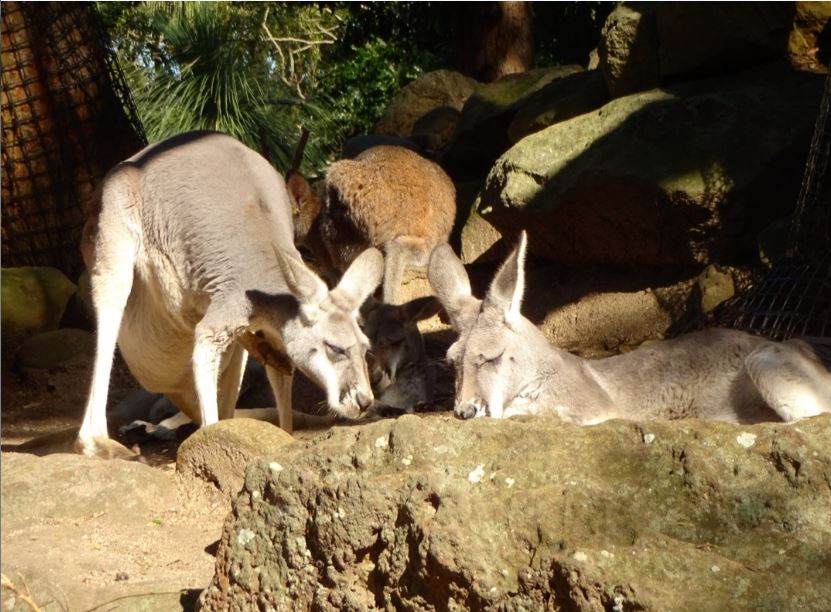
Roos 2The Taronga Zoo was another highlight of our trip. After a short ferry ride from Sydney Harbor, we boarded a cable car and made our way over the zoo from a short distance above. As we strolled about, the kangaroos relaxed in their fold, while a joey peeked out of his mother’s pouch. The wallabies hopped and played in their enclosure like kids in the schoolyard. We met a Koala named Sydney and posed for a picture near her while carefully noting her sharp claws.

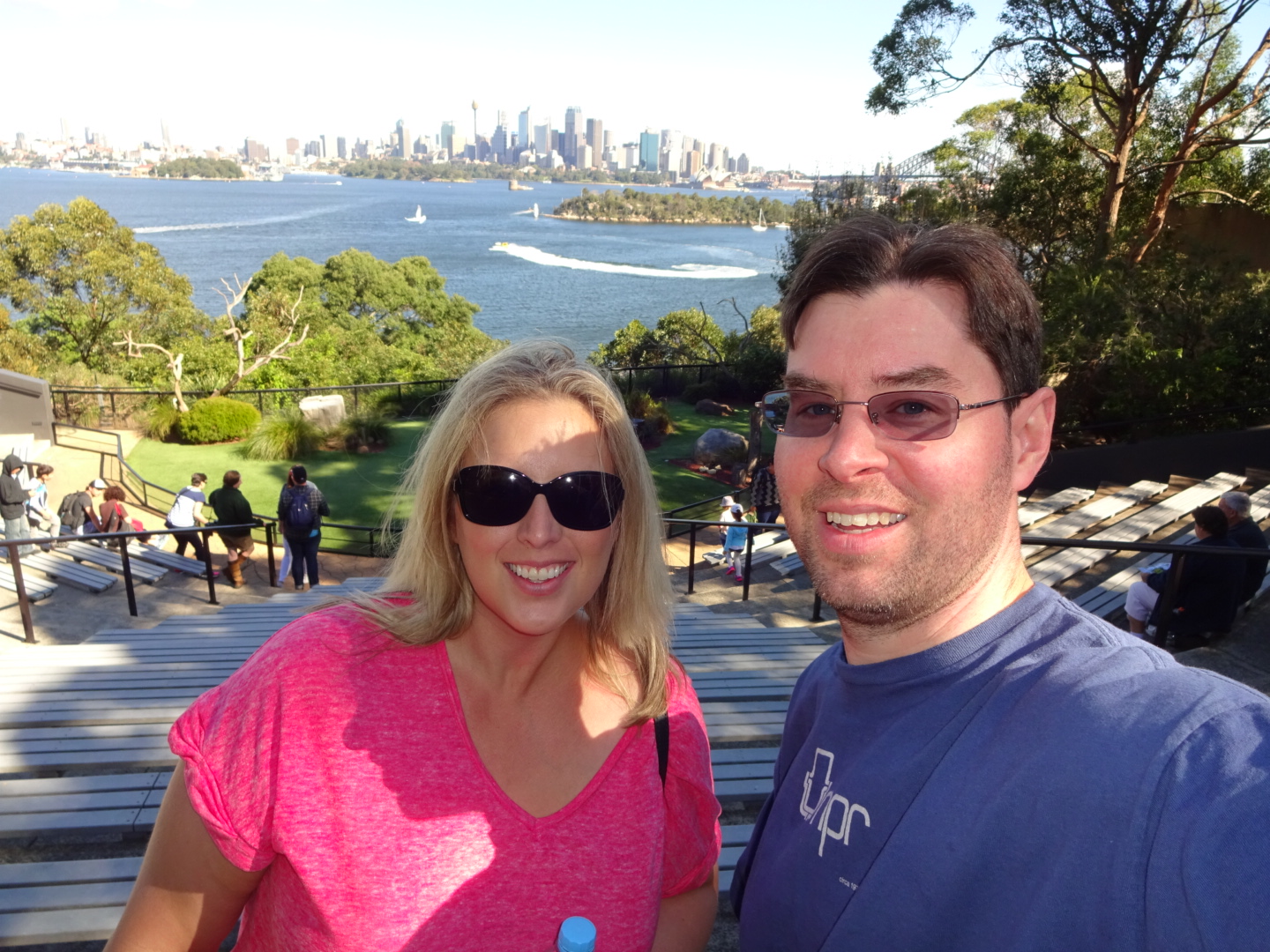
Una coppia allo zoo

Slight detail of botanicalThe Sydney Botanical Gardens were everything we hoped for and more. In those expansive Gardens inside the city we saw exotic birds and immense trees that seemed to be from the fables. Inspired by her grandmother’s love of botany, my wife examined and photographed some of the prettiest flora that we had ever come across.


Wine snipNature played an important role in another adventure we had: our trip to the Hunter Valley vineyards. We enjoyed the sense of panache and good humor of Glandore Estate Wines, and their Hunter Shiraz was delicious. At Lambloch Estate, I appreciated the hosting vintner’s ethical dictum that “the price of a wine should be what it costs to produce the wine.” I couldn’t help but think of our parents during this part of the trip, and as our shuttle ferried us about the green countryside, I remembered the similar rides we had taken from Dublin to Omagh in Ireland.


To travel well you have to practice, and it is so important to have a great partner with whom to share everything—I’m very lucky to have as a partner a highly practical planner and a thoughtful participant in just about any situation or adventure. She was very understanding about that nearly forgotten tuxedo. We witnessed a superbly celebrated wedding and explored so many moments that only Sydney could offer. We returned to Texas with the feeling that we had made a good decision to make this trip. When we are at our best, we give each step proper consideration before we take it, and we explore when we can because life could be a dream.

dusk snip of Zachary Way

The Many Sounds of Jazz – Part 1

In 1998, I bought a used CD of a 1979 Sonny Rollins LP, and it became my doorway to being a lover of the music called jazz. My father once commented that I wasn’t supposed to like jazz—and the wonder of this comment was that it was a compliment. He meant that he was surprised and impressed that someone who grew up with and loved pop music and couldn’t read or play music would become a devoted listener and collector of jazz. Here is a list of jazz recordings that have moved me considerably with some short notes on why. Some hard-to-categorize albums are included because of their kinship with jazz in terms of design and creativity. Albums are in no particular order. Both orchestral jazz and later developments in the music will be included in Part 2. Most of the selections are LP’s and original CD’s, but there are rare instances of multi-album sets.

1st Set – Jazz Modern and Classic:      

1. Moanin’ (1958, Blue Note) – Art Blakey and the Jazz Messengers

If you like your jazz in the form of the blues, this is a perfect album. It is a standard jazz quintet (piano, bass, and drums plus trumpet and tenor saxophone) manned by geniuses at every position. I recently shared this album with a guy who was a big fan of Stevie Wonder, Yes, and prog rock in general. After he listened to it, he said, “Wow, great music—where can I get more like it?” My reply was that it was a little bit like asking where you can get more of Abbey Road by the Beatles. Along with Art’s vibrant drumming style, the brilliance of this album emerges in the original compositions by pianist Bobby Timmons and the band’s then musical director and tenor saxophonist Benny Golson. On the piano, Timmons plays dense, almost gothic-sounding blues chords in his solos while Golson’s melodies and structures constantly surprise and excite. The Philadelphia-born Lee Morgan at the young age of 20 here, supplies some of the most spine-tingling and riveting trumpet solos I’ve ever heard. Ready for great music? Give Moanin’ a listen. It’s incredibly rich and original.


2. Live at the Pershing: But Not for Me (1958, Chess) – Ahmad Jamal

Over the course of his sixty-plus year (and still going) career, Jamal has consistently gravitated to the classic trio format, and his command of the piano is second to none. This album is a superb illustration of pitch-perfect wittiness, invention and stellar rhythm delivered live at the Pershing Club in Chicago. The eight-minute rendition of Poinciana on this record was edited and successfully charted as an R&B hit—and with good reason. Jamal’s performance of the closing track, “What’s New,” is reflective and surprisingly ominous in the final bars. The keynote achievement of this music is that it is innovative but very accessible.


3. Sonny Side Up (1957, Verve) – John Birks “Dizzy” Gillespie with Sonny Stitt & Sonny Rollins

This album is a knockout presentation of the vibrancy and musicality that is possible when great jazz musicians get together. Dizzy provides a vocal on the opening tune and then his trumpet and the dueling tenor saxophones of the two Sonnies get all fired up from there. The Eternal Triangle is a 14-minute high energy jazz battle between Stitt and Rollins. After Hours is the greatest blues I’ve ever heard – Ray Bryant’s extended piano intro really sets things up and then Diz can be heard on the perimeter verbally stoking and tweaking his two saxophonists as these two champions heat things up. This is beautiful, proud Black American music of a perfect vintage and superb craftsmanship.


4. Concert by the Sea (1955, Columbia) – Erroll Garner

Erroll Garner is best known as the author of the jazz standard “Misty,” and this live concert recorded in Carmel, California is one of his most dynamic and complete recordings. The opener, “I’ll Remember April,” is quite simply a staggering display of piano wizardry. On the keys, Garner uses trills, staccato riffs, light twinklings, and then produces expansive, driving sections that sweep the listeners into his world. The audio on this recording is not very good, and Erroll’s famous background humming and vocalizing can be heard throughout the album—hilarious in its own way and somehow unmistakably authentic. The trio’s rendition of the standard “Autumn Leaves” is particularly rich in melody, pomp and sentiment. Like Duke Ellington, Erroll Garner was one of those uncommon musical talents who also comes across as being very centered, joyful, and lacking in egotism—and this comes through in the spontaneous one-liner that ends the album. Pure Brilliance.


5. Mosaic (1961, Blue Note) – Art Blakey and the Jazz Messengers

This version of the Jazz Messengers is a sextet that retains only drummer Blakey and bassist Jymie Merritt from the earlier Moanin’ session. This recording introduces the piano of Cedar Walton, the tenor saxophone of Wayne Shorter, the trombone of Curtis Fuller, and the trumpet of one Freddie Hubbard. All of the compositions are new ones contributed by the group members, and the tunes have a searching, intense quality to them. The most beautiful might be Wayne Shorter’s “Children of the Night,” but all of them resonate. Art unleashes a galvanizing drum solo on the title track, and Jymie Merritt’s bass hums perfectly on Freddie Hubbard’s closer “Crisis”—which appropriately sounds like something emergent is happening. As it turned out that was quite true; these new messengers and their communications had unmistakably arrived.


6. The Cannonball Adderley Quintet Plus (1961, Riverside)

There’s something of a soul music crossover here on this album along with its genuine straight-ahead jazz pedigree. After all, when you cover Thelonious Monk’s “Well, You Needn’t” and the Charlie Parker associated “Star Eyes” this well, you are firmly in jazz territory. But there’s something else going on too. Cannon’s alto sax solos are fluid and gorgeous as can be, but the vibraphones of Victor Feldman give the music an ethereal quality that complements the night-time, street scene imagery conjured by these tunes. Feldman’s brilliant tune “Lisa” is perfectly designed and expertly played by the group—check and mate. How did that one not become a giant hit and a jazz standard? The opener “Arriving Soon” is also quite a scene-setter, and the whole session is a gem of the post-bop era.


7. What’s New (1962, Bluebird/RCA) – Sonny Rollins

Sonny Rollins What's New

While Saxophone Colossus and The Bridge are often at the top of many lists of great jazz recordings and/or superior Rollins recordings (and rightfully so), I want to call attention to this one because of Sonny’s melodic improvisation in the context of island rhythms and Brazilian stylings. Three of the album’s five tracks feature Jim Hall’s electric guitar, and his brilliance as both a soloist and an accompanist is on full display in the Bossa Nova-oriented tunes. On “Jungoso” and “Bluesongo” Sonny performs in primal duets with percussionist Candido on congas. Sonny’s tenor saxophone sounds authoritative and endlessly creative, and this piano-less group answers the album title’s question with great skill and spirit.


8. Kind of Blue (1959, Columbia) – Miles Davis

Miles Davis is a fairly provocative figure in terms of his personality and history. Putting that aside for a moment, this recording is the best-selling jazz album of all time with good reason. Miles’s compositions are timeless, and the group is positively top-notch. John Coltrane is full of ideas on “All Blues,” and Cannonball Adderley plays with gorgeous lyricism on both takes of “Flamenco Sketches.” Bill Evans and Wynton Kelly shine on piano, while Jimmy Cobb and Paul Chambers anchor the flawless rhythm section. It would be disingenuous not to include this in any list of highly listenable jazz recordings.


9. Duke Ellington Meets Coleman Hawkins (1962, Impulse)

Two all-time jazz masters play (for the first and only time) in an octet grouping culled from Duke’s orchestra. Hawkins’s tenor saxophone has its characteristic deep, rich sound, and he sounds perfect on this set of Ellington originals. One of the highlights is the “Self-Portrait of the Bean,” which was written especially as a vehicle for Hawk. Ray Nance switches over to violin to great effect for a few tunes, and this includes the beautiful, almost hypnotic rendition of Ellington’s “Solitude.”


10. The Incredible Jazz Guitar of Wes Montgomery (1960, Riverside)

With Tommy Flanagan at the piano in this quartet, Wes Montgomery presents a superior set of takes on a mix of standards and his own originals. This album is one of the most accessible on my list. “Polka Dots and Moonbeams” is very pretty and gentle while “D-Natural Blues” lives right up to its name—perfectly poised, melodic and at home in the idiom. “Mr. Walker” might be my favorite track with its sense of mid-tempo drive and attitude. This is a superb look at authentic jazz in the small group outing that published Wes’s greatness on the electric guitar. He would become known as “The Thumb”!


2nd Set – Voices in Jazz

11. Ella Fitzgerald In Budapest (Recorded in 1970, Pablo)

This live concert recording was not released until 1999, and as a fan of Ella’s singing beyond the bebop years, I find this to be my favorite album of hers. Tommy Flanagan plays piano, and Ella provides her uniquely energetic interpretations of the songs of Duke Ellington, Burt Bacharach and even Blood, Sweat & Tears. She has such a strong sense of humor and presence along with her vocal gifts, and we are lucky to have this great road show documenting her in peak form.


12. Sassy Swings the Tivoli (1963, Mercury) – Sarah Vaughan

This gold standard recording was created at the Tivoli Garden in Copenhagen, Denmark. It is a double-album (now a double CD) that was produced by the famous Quincy Jones, and it’s loaded with emotion, poise, and rich vocal artistry. Sarah sings a wealth of standards, including memorable renditions of songs from West Side Story and more overtly jazz-oriented material such as “Lover Man.” In the song “Misty,” pianist Kirk Stuart sings a duet with Vaughan in what turns out to be a sensitive yet almost vaudevillian performance in its showmanship. A great recording, just before the ‘60s became the turbulent decade we now remember it to be.


13. The Hottest New Group in Jazz (Recorded 1960-1962, Columbia) – Lambert, Hendricks, and Ross

Vocalese is the art of creating lyrics and vocals based on original jazz compositions and solos. This innovation went beyond mere scat-singing to honor great instrumentalists and explore new angles and layers in classic works of jazz. One of the best early practitioners of vocalese was the awesomely stage-named King Pleasure, and there was also the amazing Eddie Jefferson, who wrote lyrics to Coleman Hawkins’s famous improvisation of the standard “Body and Soul.” This group Lambert, Hendricks, and Ross are vocalese musicians who brought this technique into a feature presentation mode. This Hottest New Group CD is actually a compilation of 3 complete albums titled after their first one for Columbia. Jon Hendricks and his cohorts are in particularly superb form in their takes on the Ellington songbook. Annie Ross is hilariously cheeky on “Rocks in My Bed,” and the whole group shines on “Main Stem.” On “What Am I Here for?” the group waxes with humor and philosophical depth in a compact three minutes. This is frenetic, but well-coordinated vocalization built on decades of classic jazz.


14. Wild is the Wind (1965, Philips) – Nina Simone [reissued in a two-album CD w/ High Priestess of Soul]

Nina Wild as the Wind

From the spare beauty of the album cover to the unusual and striking set of songs herein, This Wild is a remarkable set. The title track is a ferociously romantic portrait as it is sung by Simone, and her original “Four Women” is one of the most haunting and socially conscious African-American ballads since Billie Holiday’s phenomenal “Strange Fruit.” Some of these tunes have a pop-symphonic structure while others are squarely in the jazz genre, but there’s no point to being a purist when Nina Simone is singing—whatever she wants to sing is OK with me.


15. Bop for Miles (Recorded 1990 & 1999, High Note) – Mark Murphy

On Ralph Gleason’s Jazz Casual television program in the 1960s, Mel Torme once said of Mark Murphy, “I think he’s an interesting singer, but I don’t think he’s a jazz singer.” Fifty years later, I would submit that he is both interesting AND an accomplished jazz singer. Murphy loves to scat, writes very canny lyrics, and possesses a rich vocal timbre. He also has a gift for infusing poetic storytelling and spoken word into his performances. On this tribute to Miles Davis, Murphy concludes the album with a heartfelt original song for the great trumpeter. The highlight for me is the up-tempo take of “Autumn Leaves” with an unbelievably beautiful and riveting piano solo by Peter Mihelich. An uncommon recording and a worthy tribute to Davis.


16. The Great Summit (Recorded 1961, Roulette) – Louis Armstrong & Duke Ellington

The 17 songs that comprise these recordings paired the piano and written repertoire of the great Duke Ellington with Jazz’s one-man orchestra Louis Armstrong. The backing band is primarily Satchmo’s band members of the time, and they tackle the classics of the Ellington songbook with poise and humor. Apparently Duke Ellington also wrote “The Beautiful American” and the closing tune “Azalea” especially for this session, and Louis gives them all the care that these brilliant originals merit. A great album to hear Louis and a delightful glimpse at Ellington playing piano in a smaller than usual grouping for him.


17. Getz/Gilberto (1963, Verve) – Stan Getz & Joao Gilberto with Antonio Carlos Jobim

This recording is best known for “The Girl from Ipanema” with Astrud Gilberto’s vocal, but there is a lot of great music here along with that iconic single. Every track is rich in melody, and “Corcovado” in particular is truly arresting in its beauty. The acoustics and arrangements sound crystal clear as usual on Verve’s Master Edition reissue of the album, and its capture of the Best Album Grammy award for 1964 is completely justified.


18. Two Men with the Blues (2008, Blue Note/Angel) – Wynton Marsalis & Willie Nelson

These two men speak the language of music, and they are very much at home in the same dialect on this legitimately bluesy and swinging set of takes. Some tracks are recorded live, and all of them sound naturally and instinctively executed. Willie takes the majority of vocals, but Wynton chimes in on the hilarious “My Bucket’s Got a Hole in It.” Many classics are given stellar treatment here, including a poetic “Stardust” and a  reading of “Down by the Riverside.” The one tune that makes me wince a bit at the lyrical content is “Ain’t nobody’s business” with its self-centered misogyny, but in some ways it’s a logical fit in a collaboration that is certainly no white-wash of musical history.


19. Encounter (1976, Milestone) – Flora Purim
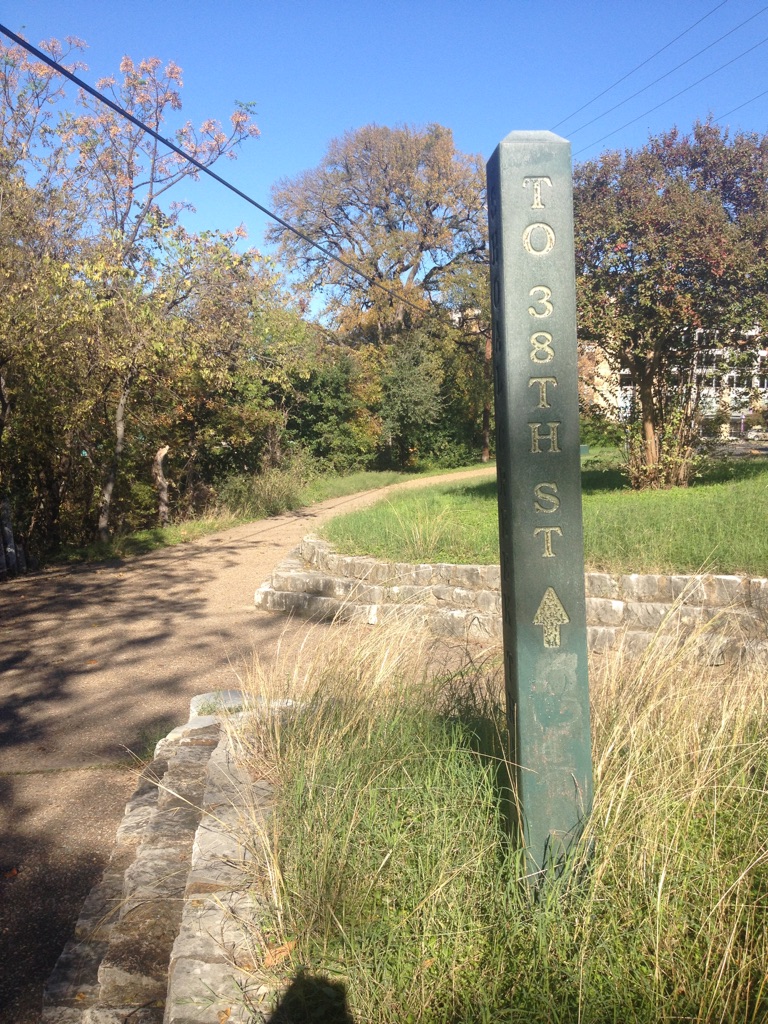
Joining with fantastic instrumentalists like sax wizard Joe Henderson and pianist McCoy Tyner, the adventurous jazz-fusion singer Flora Purim delivers a diverse set of brilliant tracks here. Chick Corea’s “Windows” is given a superb reading as the opener, and from there the set alternates between energetic wordless vocals and gently put lyrics by Flora. An unusual collection of songs delivered by expert musicians.


20. John Coltrane and Johnny Hartman (1963, Impulse)

This recording is one of my absolute favorite Coltrane recordings because of the consideration that he shows while in no way limiting the creativity and sincerity of his approach on the tenor saxophone. Johnny Hartman has a very rich, old-fashioned sounding voice that is perfectly suited to the classic tunes interpreted here. The Coltrane quartet is in exquisite form, and you can really hear Jimmy Garrison’s bass humming gracefully and propelling things along. “Autumn Serenade” and Billy Strayhorn’s “Lush Life” really come together on this standout vocal/instrumental session.

A View of Religion beyond Belief

As a great songwriter once prompted us, imagine a world without organized religion and its tenets. For a number of outspoken atheists in the young 21st century, such an absence of religion would be the assumed starting point of a far better world than we have now. Scientists Richard Dawkins, Sam Harris, Lawrence Krauss and the comedian Bill Maher are among the most assertive figures who are propounding the case for a secular worldview and the abandonment of faith-based systems. These critics of organized religion have framed the debate in terms of observable facts and logic, and in view of how human knowledge has changed so profoundly in recent centuries, religion certainly cannot be above analysis or satire. However, since our lives involve highly personal impressions and experiences and not simply a litany of indisputably factual recognitions, human beings will probably have some degree of spiritual orientation for as long as we live. One challenge is how to balance our human yearnings, insecurities, and imaginations with the always growing scientific knowledge that our species is constantly developing.

A Long-standing Debate

Atheists typically have argued that if in fact all of the world’s religious texts are solely of human authorship—i.e. “made up,” then people should abandon religion altogether. After all, if both the morality and the scientific worldview conveyed in the scriptures are highly flawed, then it makes little sense to follow religion as a guide for belief or action. When the prominent historical religions of the East and West are examined in terms of their scriptures and traditions, it is fairly clear that the emphasis is on moral truths and rituals but not verifiable facts. These ancient systems of belief were not built to stand up to an objective scrutiny. They addressed something deeper—the human need for meaning and moral structure, and they did it mainly through stories and rules.

These stories and rules reflect human imagination, but they also reflect the personal insecurities and cultural assumptions of a more primitive human existence. For just one example, the Hebrew Scriptures have a plethora of gender-biased retribution, fear of menstruation, and open allowance of violence and slavery in books such as Numbers and Leviticus. The modern world is increasingly becoming a place where traditional assumptions are challenged and irrational fears and insecurities are rejected as a basis for laws or actions. What we have left is imagination and the human instinct for storytelling, which is a more enduring and arguably relevant feature of religions and mythological systems.

The Wheel of Storytelling

Stories are a uniquely human invention. They are products of human inspiration and craftsmanship whether they are fictional or strongly grounded in facts. The growth and advancement of human civilization can be traced in conjunction with the growth of our ability to create and disseminate stories of all kinds and genres about ourselves. Well-told stories have the power to entertain, but they can do something more: stories educate us by providing a sense of parallelism between the reader and the subject of the story even when there may be a great disparity of experience between these two. If we can acknowledge the mythical components of all religions in the same way that most modern people view the Greek and Roman myths, then we can move on to a more important issue, which is not a clash of truths, but a rewarding survey in the library of human ingenuity. Whether a person reads from the Torah, the Qur’an, stories of Athena, Zen parables, Spenser’s Faerie Queen, or Henry David Thoreau’s Walden, it is possible to gain wisdom from all or none of these books—it depends on how they are read. Purportedly religious texts are neither superior nor inferior to other works of literature and art. If we can enjoy and be inspired by fiction and legends, why would it be unfavorable to categorize religious texts as some of the richest and most sociologically instructive works of fiction, tradition and legend ever written? Many great religious teachers past and present have taken this view.

Practical Considerations

In his book, The God Delusion, Richard Dawkins argues that religions are impractical, fallacious, and unnecessary systems of thought. While I endorse most of Dawkins’s criticisms of organized religions, I would invite the examination of specific aspects of religion and especially religious texts. The work of the author Joseph Campbell greatly illuminated the storytelling component of the world’s religions and myths and showed that disparate cultures that had had no contact with each other fashioned mythical stories with uncanny similarities and shared patterns. These stories helped to organize and give empowering direction to our distant ancestors. Earlier this year, the Israeli historian Yuval Noah Harari published his book Sapiens: A Brief History of Humankind, in which he comments on the important role of storytelling for our species over thousands of years. As I acknowledged earlier, much of the rules and cultural mores of ancient religions are clearly flawed, but to this day the stories—even when viewed with no lens of holiness—teach us much about human motivation, society, and character.

Eastern religions have made some very practical contributions to civilization in the form of yoga and mindfulness meditation, both of which are associated with substantial health benefits. In the late 1980s, a group of western neuroscientists began a series of conversations with scholars and monks of Tibetan Buddhism that went on to include the current Dalai Lama. These meetings officially became the Mind and Life Institute, and it has generated fruitful exchanges of ideas involving scientists such as Paul Ekman and Daniel Goleman with highly trained Buddhist meditation practitioners. In May of 2001, the Institute’s work involved the use of functional MRI’s and other laboratory research to verify and analyze how a highly trained Buddhist monk can alter his bodily functions and physiological responses to stimuli. By use of breathing techniques and varieties of meditation developed over centuries, this monk was able to restrain his natural startle reflex and demonstrate peak levels of focus, calmness, and observation in various experiments. The Mind and Life Institute considers its mission to advance knowledge and improve the lives of sentient beings, and the Dalai Lama has played a key role in this work as both an enthusiast of scientific discovery and a spiritual leader.

Examining Traditions and Navigating the Present 

These kinds of exchanges and developments don’t necessarily point to the idea that everyone ought to be practicing Buddhism or doing yoga or joining a church. Instead, these exchanges show that we should examine beliefs and traditions and find what can be genuinely productive. Sometimes the value is subtle and tucked away. I may not be a proponent of prayer, but instead of seeing prayers as foolish attempts at wish fulfillment, I like to think about what people’s prayers say about themselves and how they may be an intangible part of a bigger story. Religious scriptures are certainly not science textbooks nor are they unassailable legislative guides. We can read the book of Job for insight into suffering, and we can turn to Newton, Galileo, and Einstein for information about the structure and tendencies of our universe. And as most modern societies have done, when we require laws and standards of conduct, we engage in the effort to write them and progressively improve them instead of relying on the laws of the ancients. Many people correctly point out that the communal aspect of organized religion serves a valuable role. For nonbelievers, ethical humanist societies and organizations provide an important vehicle for discussion and social functions such as weddings that would ordinarily be handled by a church or other religious institution. When religious ceremony or tradition doesn’t meet the needs of an individual then it is time for her to establish new practices and communities as an increasing number of people are doing.

Conversation or Conflict?

One challenge for fair-minded nonbelievers is the light in which society views them. In a series of studies that were published in December 2011, researchers at the University of British Columbia found that participants judged atheists to be less trustworthy human beings than Muslims, Christians, gay men, Jewish people, and feminists. The only category of people in the study who were distrusted at a similar rate to atheists was that of rapists. In 2014, the New York Times reported that seven states in the U.S. still have state constitutions with language barring an atheist from serving as an elected official. For example, Mississippi’s constitution states that “No person who denies the existence of a Supreme Being shall hold any office in this state.” Despite the increase in people claiming no religious affiliation, perception of self-described atheists is still negatively clouded even if it is not really founded on any legitimate standard or assumption.

It was partly because of this vague hostility to atheism that the March 2012 Rally for Reason was held in Washington, D.C., gathering together an enthusiastic group of more than 20,000 atheists, secular humanists, and general non-believers. At this event, Richard Dawkins humorously opined that it was quite a remarkable predicament that reason and rationality would need to be defended in the 21st century. All joking aside, it is fairly clear that many people of faith have short-changed their evaluations of atheists and secular humanists in the same way that some atheists are insulting and dismissive toward religious people. In the spring of 2007, neuroscientist Sam Harris debated Pastor Rick Warren on the topic of religious belief. At one point in the debate Warren asserted, “I’ve never met an atheist who wasn’t angry.” This is the kind of attempt to marginalize non-religious people that is going to lose its effectiveness gradually as more people openly ask authentic questions about religious doctrines.

A number of talented scientists and thinkers have made robust contributions to this overall debate in recent years. Sam Harris has done some very perceptive writing in his 2014 book Waking Up: A Guide to Spirituality without Religion. He engages in an inquiry about life, experience, and consciousness in order to reclaim the idea of spirituality from a strictly religious context—which I consider to be a worthwhile pursuit. While I agree with Richard Dawkins and Bill Maher on some issues, I think their approaches can occasionally be reductive and vitriolic. For a more even-handed approach, take a look at the writings and statements of the physicist Lawrence Krauss, who has done some impressive work in the conversation on science and in efforts to understand the essential nature of existence. I appreciate Krause and Neil DeGrasse Tyson because they are nonbelievers who display a contagious enthusiasm for debating and sharing ideas, and they often bring up scintillating possibilities and leave open the questions for which they don’t have sufficient data.

The Challenge of the Many Paths

The inability of people to think critically about religious ideas and traditions is a significant problem in our world. We often worry about the danger of loose nuclear weapons, but we have a danger in loose metaphors and parables that are misread to be facts. When religions are viewed and practiced as if they are fundamentally and literally true, many practitioners end up with a series of unquestionable but flawed answers to questions that they never actually asked. None of this is to say that it is wrong to believe in some form of life after death or to believe in important principles. We live for a relatively short time with the backdrop of the stunningly vast and ancient canvas of the universe (or multi-verse) with all of its amazing substances and energies. We are still learning to understand aspects of the atom. Who is to say what forms of life will emerge over millions of years just as we have emerged? Maybe we will live again in a new way.

We should invite people to analyze the old scriptures and dogmas to understand the limitations of these documents. Science, experience, and inquiry are always producing new material that we can shape into new myths and accounts that will add to the store of inspired literature and meaningful narratives that push us forward toward progress, knowledge, and moments of happiness. Rather than seeing people abandon religion, I would prefer to see religious leaders and institutions emphasize the human creativity and myth-making at their foundation. If human beings can see clearly our capacity for both ingenuity and error, we are likely to be wiser travelers on our many paths.

C.S.

Part 3 of The List & Coda

17. Wildewoman, Lucius (2013)

I became aware of this recording because of the endorsement of NPR’s Bob Boilen. In his introduction of the song “Tempest” from this album, Boilen stressed the way that the songs build, and boy did that come through for me when I listened to this entire album. The 21st century has seen some phenomenal musicians developing their craft, but I have been slow to embrace the current generation. Bands such as Death Cab for Cutie and Coldplay have recorded many great songs. Solo artists like Adele, Pink, Regina Spektor, Jamie Cullum and Bruno Marrs have shown that there is a lot of polished talent and creativity in 21st century pop music. In Wildewoman, the group Lucius has made an album that is the best of alt music and music that you can dance to and sing along with. The songwriting is primarily supplied by the band’s two female lead singers, Jess Wolf and Holly Laessig, who sing with beauty and great personal fire. On songs such as “Turn it Around,” there is a pithy wisdom in the metaphors of the lyrics and a contagious power to the beat. “Tempest” speaks of lovers as “two ships passing” and makes it sound fresher than it should be. I’m not sure if the song “Two of Us on the Run” is technically a ballad, but it is one of the most sincere explorations of true lovers experiencing the challenges of life together that one could imagine. This music is creative and genuine in its messages and its melodies, and I hope that it gets many discoverers as time goes on.


18. Graceland, Paul Simon (1986)

Although this album won the Grammy award in 1987 and had significant exposure along with a major single and popular video, I did not listen to it in its entirety until the early 2000s. I am certainly not the first person to be immensely impressed with the enthusiasm for life and the commentary on society that Simon presents in the opening track, “The Boy in the Bubble.” This song begins with the alarming reference of an exploding bomb insidiously conveyed in a baby carriage and pivots into an upbeat catalogue of things occurring in the world at the time—and some things like “lasers in the jungle” that seemed to express the idea that the mid-1980s was a nexus of present and future. Author Steven Pinker’s exhaustive work on the gradual decrease of historical violence, The Better Angels of our Nature, contains a quote from this song that is used to convey the idea of self-concept in a modern progressive society: “The way the camera follows us in slo-mo / The way we look to us all.” As the album continues, the great irony and outstanding poetry of Simon continue to flow on songs such as “Diamonds on the Soles of Her Shoes.” In retrospect, the single “You Can Call Me Al” fools me into thinking that Simon foresaw the infidelity scandals of televangelists of the 1980’s and (later on President Clinton) when Simon croons that his role model is “gone” and has “ducked back down the alley” with a young woman. The title track expresses the talismanic power of pop legends and cultural reference points as we age well into our 40s (as Simon was doing at the time). Of course this album and Simon’s very impressive follow up in 1990, The Rhythm of the Saints, are also musical partnerships and explorations of sounds from around the world. Graceland featured the talents of many South African musicians including the group Ladysmith Black Mambazo as well as artists such as Linda Ronstadt and Los Lobos. Nearing the thirty year mark from its release, Graceland is not finished reminding us of “the way we look to us all.”


19. Classified, James Booker (1982)

James Booker was a gay, African-American blues musician from New Orleans who loved to play on tinny, rickety, little pianos. He would make these keyboards come to life despite their limitations, and according to his friends and those that studied his music (like Harry Connick Jr.), Booker was a master of styles and inventive improvisation. I found this recording Classified after reading of it on the online All Music Guide a decade ago, and it is an album rich in show business attitude, humor, sensitivity, and bluesy truth-telling. The opener “All Around the World” has Booker’s perfect combination of genuinely funny delivery and completely authoritative tone. One of the great joys of this album is the fact that Booker performs several instrumental numbers on solo piano in which he stretches out and weaves together beautiful classical piano phrasing and melds it with the blues as he does in the performance of “Angel Eyes.” On “Swedish Rhapsody” he takes the traditional melody and makes it hum on his clinky piano and then sweep at times with the motion of a gently flowing river. Booker’s vocal style is quirky but intense, and his conception of the blues is anything but typical. In 2013 a documentary production of Booker’s life and music was released by filmmaker Lily Keeber. The film Bayou Maharajah: The Troubled Genius of James Booker is a very absorbing look at the man who made this remarkable album.


20. Yes, The Pet Shop Boys (2009)

This album has the pure sound of dance music paired with the heart and ambition of great songwriters. Yes features ballads that are beautiful and thought-provoking, and they somehow successfully combine the very personal with the epic. The more upbeat tracks inspire movement and complement propulsion: this CD is a great one for an hour’s drive over open roads. The “King of Rome” is one of the aforementioned ballads that really packs an emotional punch with its central conceit (and almost Grecian in its tragic quality). “Building a Wall” is personally confessional but also historically literate. “Beautiful People” is an upbeat dancer that strikes the right balance between the pursuit of real happiness and fascination with superficial beauty and materialism. “Legacy” is the album’s finale that ambitiously caters to the ego of anyone who has been emotionally wounded and reminds us that we will “get over it.” Whenever I put this CD on and listen after I haven’t heard it in a while, I remember that it is one that I won’t get over any time soon.


21. Seduzir, Djavan (1981)

This is a brilliant album entirely in Portuguese language that reflects many of the best elements of late 20th century American r&b and pop music blended and delivered in a Brazilian context. The album’s title is translated in the liner notes as “seducing,” and it is an apt title since the songs are as hypnotic and transporting as any I have ever heard. Listening to this album and becoming acquainted with its many distinctive songs was an education in itself about how music can transcend language. While the song titles are glossed, only tiny fragments of the lyrics are translated; I have always been struck by how clearly the themes emerge and how communicative Djavan’s vocal style and tone are in these songs. The song “A Ilha” (Island) features an unexpected violin release that is laser-precise but feels thoroughly spontaneous. As the solo builds and twists, Djavan reenters with an ad-libbed vocal that doubles the passion. On “Faltando Um Pedaco” (Missing a Piece), the title theme of separation and longing is conveyed with beautiful middle-high notes that are stretched out with alternation of bell-tone and falsetto in perfect measure. The transitions from one song to the next have great variety as an aching ballad about “The Brunette Who Drives One Crazy” gives way to the cocky and brief sketch of a “Jester.” The artist’s vision comes through very strongly, and repeatedly in the album, Djavan’s voice is genuinely outstanding, resonating with the kind of clarity, strength, and perfect tone of phenomenal singers like George Michael, Stevie Wonder, and Chaka Khan. Part of the music’s accessibility for me is fueled by Djavan’s Van Morrison-like ability to contribute wordless vocals that dance and float across the songs, moving beyond words to communicate intuitively with music and emotion.


22. The Poet, Bobby Womack (1981)

I love ambitious r&b music, and like both Black Moses and What’s Going On, The Poet is a very ambitious album that is loaded with atmosphere, attitude, and fantastic melodies. The album cover is an absolute classic with Womack sporting a lavender suit while holding his guitar, wearing quintessential giant 80’s sunglasses and holding his hand up communicatively. The album lives up to its cover and title by delivering songs that are not so much universal but personal in their appeal. Womack engages with the listener in signature, conversational interludes and crests on the choral wave of his female background singers. In the song “Lay Your Lovin’ On Me” Womack is unstoppable in his enthusiasm and grasp of infectious rhythm. In the album’s biggest hit song, “If You Think You’re Lonely Now,” he crafts an inescapably attractive ballad that is anything but a typical love song. Much of the song’s emphasis is on the tension of love and relationships, and there is an authentic egotism in the song’s ethos that somehow works without undercutting the tenderness of the melody. In some instances the album dates exactly to the time of its early 1980s release in its pop culture references and sonic elements, but the Womack team’s work and the artist’s overarching intentions have resulted in an album that is still compelling in its beauty, reach and panache more than thirty years later. In “Where Do We Go From Here?” Womack closes the album with a reflective ballad that paints the portrait of a relationship at the crossroads. The Poet is 40 minutes of captivating music, perfectly sequenced and featuring a singer who builds his own cult of romantic personality.


23. Little Earthquakes, Tori Amos (1992)

In the mid-1980s, following the appearance of Michael Jackson’s Thriller and the strong moves made by Madonna and Prince, a kind of gauntlet was thrown down, and many artists, male and female, old and new, stepped forward to record a “statement” song and maybe even a groundbreaking full album. So the late 80’s gave us Sting’s superb recordings “Fragile” and “Englishman in New York” while Madonna released Like a Prayer, her most conceptually and socially ambitious record—and quite a good one for my money. In 1989, Billy Joel recorded “We Didn’t Start the Fire,” and the next year, George Michael put forward Listen Without Prejudice, Vol. 1 in an impressive effort to reach for the high ground both creatively and in terms of artistic seriousness. And then in 1992, came Tori Amos’s Little Earthquakes—a recording that begins with the thumping page-turner of a song, “Crucify,” issuing a very personal challenge to organized religion. The ethos of the album is something like a feminist response to the 80s—perhaps captured best in the sarcasm-rich song “Silent All These Years.” The entire recording is as honest and unpredictable as Frank Zappa and as crafty and beautifully arranged as Joni Mitchell. Sometimes the honesty is totally off-putting, as in the song “Me and a Gun,” in which Ms. Amos relates the story in a cappella, free-associative lyrics of her own rape. These twelve songs with their beautiful acoustic pianos and varied styles largely escape that synthetic late 80s early 90s sound. The songs show diverse influences; on “Happy Phantom” the whimsical, loping vocal reminds me of Freddie Mercury in “Bohemian Rhapsody.” The album closer, the title song, has a statesman-like quality as it catalogues the relatively small-scale experiences that shake our world and move us deeply (the love affairs, the deaths, the crimes etc.) even though they may barely shake the larger landscape. This album, for me, builds on and rewires the statement albums of the late 80s, and it shows where the “alternative” and popular music of future decades could go in the hands of a capable and driven artist.


24. The Waterfall, My Morning Jacket (2015)

Jim James and his collaborators in My Morning Jacket have forged a musical catalogue and a style that is an authentic and perfectly constructed combination of soul and rock with very crafty touches of country and folk elements. Those country and folk elements are sometimes simply a pedal steel guitar or a lyrical phrase or title that suggests a rustic setting as in the case of “Hillside Song” (one of the tracks from the expanded edition of this album). As a spiritualist and a skeptical agnostic, I simply love the opening track “Believe (Nobody Knows)” for both its melodic and conceptual sincerity. This music has very real echoes and voicings that remind me of The Who, Pink Floyd, and the Allman Brothers Band in very positive ways. The album as a whole seems to be wrestling with challenging life experiences and loss, but there is so much great work of transmuting these into the material for healing art. The guitars and synthesizers on this album sound fantastic, and if you happen to enjoy this kind of deep, thoughtful classic rock that contains equal measures of drive and reflection, every track has a pivot point that just kind of pulls you in and takes you further on the journey. Maybe the high point is “In Its Infancy (The Waterfall),” wherein the power of human belief and agency are affirmed in a way that does not shortchange the challenges of living in the world. Nature informs this art, and in turn this art comments powerfully on the nature of humanity.


25. Enlightenment, Van Morrison (1990)

The veritable font of mystical musicality that is Van Morrison is well known to many around this world. Before I was born, he gave to music the “Moondance” and the unforgettable portrait of the “Brown-Eyed Girl.” When I was 22 years old, I heard my mother’s cassette tape of this album Enlightenment, and it was the beginning of an ongoing commitment to his music. At that time, I was majoring in world religion as an undergraduate student, and I was deeply impressed with the way that Van had taken hold of memory and experience while putting them to music that is reflective and consumed in the search for spiritual attainment. The opener “Real Real Gone” starts things off with a driving electric piano, and it conveys a love of mythic proportions while invoking the names and quotations of great past legends of soul music such as Solomon Burke and Gene Chandler. The title track has a beautiful choral intro that perfectly positions Van to launch a conversation about the nature of existence. There are no easy answers, and the portrait of the self in the song is one that is happily engaged in life and puzzled at its mysteries but pushing to solve them and to find the right mind and way of being. Morrison’s Eastern mysticism in the title track is also paired with the searching Christianity portrayed in the song “Avalon” and its reference to the Holy Grail. The album contains a powerful tribute to old times and youthful memories titled “The Days Before Rock ‘n Roll,” an extended ode that features spoken word paired with singing to tell its story. This album contains so many beautiful moments of meditation on life balanced perfectly between lyrics and instruments, and the song “So Quiet in Here” may be one of the finest examples of this quality. The song features an incredibly sensitive performance on the piano by Mícheál Ó Súilleabháin, perfectly calibrated strings, and Van’s lyrical portrait of a night with sparkling lights in the distance, sailing ships, and beloved friends. The search for peace and fulfillment goes on, and sometimes we have moments like this one on the journey.


Reservations, Equivocations, and Closing Thoughts:

This project of assembling and commenting on my favorite pop, r&b, rock, and blues albums was a journey into the past and a revealing self-examination. While putting this list together, it became difficult to establish or justify the choices of what is included and the tens or even hundreds of albums that I enjoy greatly but didn’t include—hence my list of additional favorites below that I just couldn’t leave unmentioned.

While the digital music age has produced incredible flexibility for choosing our own configurations of music for a variety of listening purposes, the album presents artists with a challenge. Can they craft and sustain a theme, a style, or a musical identity in a way that has the magnetic quality of bringing individuals to listen again and again?

This list is a travelogue of journeys across many minds and landscapes of emotion. I hope that these commentaries have some interesting elements for anyone who reads them. It is dedicated to my mother and father, who helped me to find my love of music.


Additional favorites:

Freak Out!, Frank Zappa and the Mothers of Invention (1965)
Twenty-something, Jamie Cullum (2003)
The Royal Scam, Steely Dan (1976)
Poetic Champions Compose, Van Morrison (1987)
Sunflower, The Beach Boys (1970)
Transatlanticism, Death Cab for Cutie (2003)
Songs for Silverman, Ben Folds (2005)
Hymns to the Silence, Van Morrison (1991)
Rapture, Anita Baker (1986)
Slow Dancer, Boz Scaggs (1974)
Tunnel of Love, Bruce Springsteen (1987)
Listen Without Prejudice, Vol. 1, George Michael (1990)
White Album, The Beatles (1968)
No Guru No Method No Teacher, Van Morrison (1986)
Mothership Connection, Parliament/Funkadelic (1975)
Farewell, Simply Red (2011)
Thriller, Michael Jackson (1982)
Gaucho, Steely Dan (1981)
Hejira, Joanie Mitchell (1976)
…Nothing Like the Sun, Sting (1987)
Evolver, John Legend (2008)
It Serves You Right to Suffer, John Lee Hooker (1966)


Part 2 of The List

9. Abbey Road, The Beatles (1969)

I was born several years after the breakup of the Beatles, but I grew up with the songs of Revolver, Rubber Soul, and Sgt. Pepper. When I began my record collection in the mid 1990s, my father told me that I should definitely acquire Abbey Road. My twenty-year-old CD edition of this album is one that I almost always play from beginning to end without skipping tracks. It’s difficult to explain what brings the songs together in some cases— “Maxwell’s Silver Hammer” is a strange song to be paired with George Harrison’s beautiful “Something,” and yet these juxtapositions work perfectly because they show that one great freedom of music is the ability to recast lyrical tone through melody and delivery. The Beatles knew intuitively that language could do what George Carlin or Noam Chomsky illustrated—that one could say that “colorless green ideas sleep furiously” and have fun with the contradictions in the same way that “Maxwell’s Silver Hammer” could be a lighthearted and danceable song about a serial killer. The album makes for a perfect swan song for the band. They incorporated strange portraits like “She Came in through the Bathroom Window,” transfixing harmonies in “Because,” storybook rock and roll lullabies such as “Golden Slumbers,” and even poetically delivered complaints about record companies in “You Never Give Me Your Money.” Why did the band cross the road? Clearly, they were on their way to make one of the best rock albums of all time.


10. Silk Degrees, Boz Scaggs (1976)

The songs of this album evoke the 1970s in an unmistakable way, and it turns out that this association works out really well. Boz took the best elements of pop, r&b, and soul and combined them each in different measures from song to song. These concoctions turn out to be lasting examples of music that is the nexus of hip, street-smart, and romantic. The songs are riffy and danceable in an irrepressible way. One of my favorites is “Georgia,” which is a great example of Scaggs’s incredible instinct for wedding a driving rhythm and gorgeous melody to a character-focused caper narrative—even if the caper doesn’t go as expected. Aside of the album’s great chart hits such as “Lowdown” and “It’s Over,” the album also has beautiful off-the-beaten-path moments such as the jazz fusion flugelhorn soloing at the end of “Harbor Lights.” Overall, it is an expertly realized album that puts forward the best of the sound of the ‘70s.


11. The Dark Side of the Moon, Pink Floyd (1974)

Along with Electric Ladyland, this classic by Pink Floyd is one of the two most rock-oriented albums on my gathering here. And along with What’s Going On, it is certainly one of the most serious in tone and probing of the human condition. It has a cinematic gravity to it because of the monumental power of each track and the many interesting sonic special effects that are featured. The background vocals on “The Great Gig in the Sky” are one of my favorite elements, and the expansive saxophone and guitar solos point the listener toward a vision of the grandeur and fragility of life itself. This is one of the best albums for highlighting the distinction between an album and a playlist. The Dark Side of the Moon has a cohesion and relationship from song to song that creates the feeling that you are on a journey to witness a fantastic and terrifying galaxy with Pink Floyd as the experienced mission crew.


12. Live – the Loom’s Desire, Laura Nyro (1994, released in 2002)

This album is the closest to a compilation/greatest hits recording on my list, and it is another double-CD recording, comprised of two performances on separate dates in 1993 and 1994. In the early 2000’s, I was not familiar in any clear way with who Laura Nyro was or what songs she had written. I borrowed this 2-CD set from my free library and was genuinely impressed with the beauty of the songs and the sincerity of her voice on these two live dates. She establishes a rapport with the audience in the short intros, brief asides, and especially the many standout songs that she delivers. The album has a very heavy dose of Sophia, Sappho, and moon-goddessy type of new age feminism that works perfectly and feels thoroughly natural and sincere. The songs, the concepts, and the ethos of these performances are never forced; they are remarkably full for just a woman, a piano, and the occasional support of a small female background chorus. The album opens with the Phil Spector co-written “Oh, Yeah, Maybe Baby”—it’s a perfect intro that instantly arrests the listener’s attention. As each set progresses, Nyro focuses heavily on her own original material, keeping the performances poetic but never too long and rewarding us with variety and melody. The only sad thing about this album is that Laura only lived to see the late 1990s. I hope that she knew how great these recordings would turn out to be.


13. Songs in the Key of Life, Stevie Wonder (1976)

This double album-plus was a Grammy award winner and a defining concept album in Stevie Wonder’s recording career. The album famously required several years of work and massive amounts of orchestration. Songs in the Key is an album with which I have a family connection—the lead guitarist on several tracks (including the amazing “Contusion”) and co-writer of the song “Saturn” is my uncle, Michael Sembello. Aside of the singles like the familiar “I Wish” or “Sir Duke,” there are many superb moments such as the outstanding melody and changing tempos of “Knocks Me Off My Feet.” As a concept album devoted to the elements and experiences of life, this recording delivers with 21 songs that span the range of human endeavors and knowledge. From the personal side of parenting in “Isn’t She Lovely” to the subjective intimacy of “Joy inside My Tears” or the social consciousness of “Black Man” to the cosmic consciousness of “As” and “Saturn,” there is a rich palette of colors and emotions that make this near triple-album worth exploring.


14. Astral Weeks, Van Morrison (1968)

My love of Van Morrison’s music is an inheritance given to me by my mother. This recording interested me even before I first listened to it because as a jazz and blues fan, I was interested in Van Morrison’s sound paired with a small group of jazz-oriented musicians. The album is cohesive, natural, and intuitive. Of particular interest alongside of the mythical and formative imagery delivered by Van’s outstanding voice is the acoustic bass of Richard Davis. The bass resonates in the album as a perfect pulse that is both a backbone and a muscle. The vibraphones and flute add the extra sonic touches that complete the ethereal feeling of the recording. The album sides one and two are significantly given the headings “In the Beginning” and “Afterwards” which hint at the transformation of innocence into experience. In selecting this album as a personal favorite, I have broken no new ground. As a late sixties hybrid of styles fueled by incredible sensitivity and creativity, this record stands alongside universally lauded favorites such as Bob Dylan’s Blonde on Blonde and the Beatles White Album in reputation. The album has many stirring moments, but one that has always haunted me is the apocalyptic sound of the soprano saxophone in the final song, “Slim Slow Slider.” If this is the same girl to whom Van sang in the song “Beside You,” then circumstances have markedly changed. Instead of serenading, the singing is more like a frank talk about what once was and the way that the girl is “going for something” and “won’t be back.” Sometimes the best rock music doesn’t sound like rock.


15. Black Moses, Isaac Hayes (1971)

This double album recording is a flat-out revelation of the incredibly musical capabilities of Isaac Hayes. The arrangements are of unexpected beauty and expansive depth. The Black Moses character is a man making a complete and intensive circuit of the experiences of attraction, love, passion, and rejection. After the opener “Never Can Say Goodbye,” Hayes creates a nine-minute exploration of Burt Bacharach’s “(They Long to Be) Close to You” that is simply transfixing. The quality of Isaac’s vocal, the spacious arrangement with horns and strings, and the gorgeous singing by the women on backup vocals have made this possibly my favorite song master take of all time. The virtue of this album is that Hayes is able to perform the songs of Curtis Mayfield, Bacharach, Gamble and Huff, and Kris Kristofferson in a seamless mosaic that stands as a sparkling exemplar of all that r&b music can be. Songs such as “Man’s Temptation” have an energy that still resonates agelessly more than forty years after its initial release. This is Hayes at his best, and he is a tremendously compelling musical presence on each side of this double LP.


16. The Bossa Nova Hotel, Michael Sembello (1983)

This recording was created by my uncle, following his time as a Wonderlove guitarist and co-writer with Stevie Wonder and much sought-after session musician. The album shows off the great musical instincts and conceptual genius of a natural and very practiced talent. The synthesizers of the 1980s are made to shine in the service of one of the most unusual collections of songs ever recorded. Never before has an album featured tributes to Godzilla, Jesus of Nazareth, a nameless African-American cowboy, and an android that can love. On the other hand, in songs such as “It’s Over” and “Talk (featuring a vocal by Cruz Baca Sembello),” Michael shows his great talent and expertise at writing the song of a romantic love that has been lost or shattered from within. While this album is not very well known outside of artists and people who were fixtures in the music industry in the ‘80s and ‘90s, the album features the ubiquitous hit single “Maniac” (co-written by Dennis Matkosky) from the movie Flashdance. The songs are the brainchild of Michael with the collaborative contributions of brother Danny Sembello and simpatico musician and friend David Batteau. The album has a very effective array of soloists such as George Duke on keyboards and Paulinho Da Costa on percussion. The recording stands as a perfect tribute to the artist, the era of the precisely engineered studio album, and all of the possibilities of the period both obscure and those bursting forth in summer movie soundtracks.